Your diamond ring was engineered to withstand a lifetime of experiences, yet a single weekend of sunscreen and fine red dust from the Tanami Track can leave it looking like a weathered relic rather than a piece of fine jewelry. Learning how to clean diamond ring at home safely is not just about basic maintenance; it’s about preserving the technical integrity of a handcrafted sanctuary you wear on your finger. You deserve the same quiet luxury in your jewelry as you do in your travel, without the persistent fear that a DIY solution might compromise a delicate setting or degrade the metal.
We believe that high-end performance should not be confined to a professional workshop. This guide delivers a professional-grade restoration method that removes the film of grime accumulated from daily life, returning that signature “new-ring” sparkle within minutes. We’ll walk you through the precise steps to achieve a flawless finish using safe, common components, ensuring your most prized possession remains as resilient and radiant as the Australian horizon.
Key Takeaways
- Understand why the Australian environment—from red dust to coastal salt—acts as a “grease magnet” for your diamond and how to reclaim its lost brilliance.
- Master the precise soak-and-brush technique to learn how to clean diamond ring at home safely without compromising the structural integrity of your handcrafted setting.
- Discover the essential, non-abrasive tools required to meet a professional standard of care using simple ingredients found at your kitchen bench.
- Protect your investment by debunking common myths, ensuring you avoid harsh chemicals and abrasives that can permanently erode precious gold alloys.
- Identify the critical signs of structural wear that require expert intervention, balancing home restoration with essential six-month professional maintenance.
Restoring the Radiance: Why Your Diamond Ring Loses Its Sparkle
A diamond is an engineered marvel of nature, built to withstand the pressures of time and terrain. Yet, despite its legendary hardness, every stone possesses a hidden vulnerability. Diamonds are naturally lipophilic, meaning they act as grease magnets for skin oils, sweat, and daily grime. This biological attraction is the primary reason your heirloom begins to look dull. Throughout the history of jewellery, the challenge has remained the same: maintaining the stone’s optical performance against the elements of life.
In the Australian context, the stakes are higher. Our lifestyle demands a unique resilience. Whether you are navigating the red dust of the Pilbara or enjoying the salt spray of the Gold Coast, your ring is on the front lines. Sunscreen, salt water, and fine silica dust conspire to coat the facets of your diamond, suffocating its ability to refract light. Learning how to clean diamond ring at home safely isn’t just about aesthetics; it’s a ritual of restoration that preserves the “grit and glamour” of your daily adventures.
Regular maintenance also serves a technical purpose. Dirt buildup can act as an abrasive, slowly wearing down the metal of your setting or masking structural issues. By clearing away the debris, you ensure the integrity of the prongs and the security of the stone. It’s a transition from seeing cleaning as a chore to viewing it as a necessary inspection for your most precious sanctuary.
The Impact of Daily Adventure on Fine Jewellery
Modern life introduces a cocktail of contaminants to your ring. Hand sanitisers with 70% alcohol content and thick SPF lotions create a persistent film over the pavilion, the lower portion of the diamond. This hidden buildup is often the real culprit behind a lifeless stone. While the top facets might look clear, the dirt trapped behind the setting blocks light from entering and bouncing back to your eye. Maintaining a balance between a rugged lifestyle and refined luxury means addressing this accumulation before it hardens into a stubborn crust.
When to Clean: Identifying the Signs of Buildup
You’ll know it’s time for a restoration when your diamond loses its fire. If the stone appears “cloudy” or the sharp flashes of rainbow light (scintillation) have turned into a dull grey, the facets are compromised. It’s also vital to check your prongs during this process. Debris can often wedge itself into gaps, making a loose stone feel secure when it’s actually at risk. For a deeper dive into professional maintenance standards, consult the ultimate jewelry care guide. Understanding how to clean diamond ring at home safely
The Essential Home Cleaning Kit for Fine Jewellery
Restoring the brilliance of a diamond doesn’t require a laboratory or industrial chemicals. It requires a disciplined kit and an eye for detail. Much like maintaining the chassis of a high-end hybrid camper, the goal is to remove the grit of the journey without compromising the structural integrity of the build. Learning how to clean diamond ring at home safely requires a minimalist approach where quality of tools outweighs the quantity of products.
The Dryft standard for maintenance is built on the philosophy of quiet luxury. We value things that are engineered to last, and your jewellery is no different. You can achieve professional-grade results right at your kitchen bench using three primary components. This process isn’t about scrubbing; it’s about a gentle, chemical reaction that lifts oils and dust from the pavilion of the stone.
The Safe Ingredient Checklist
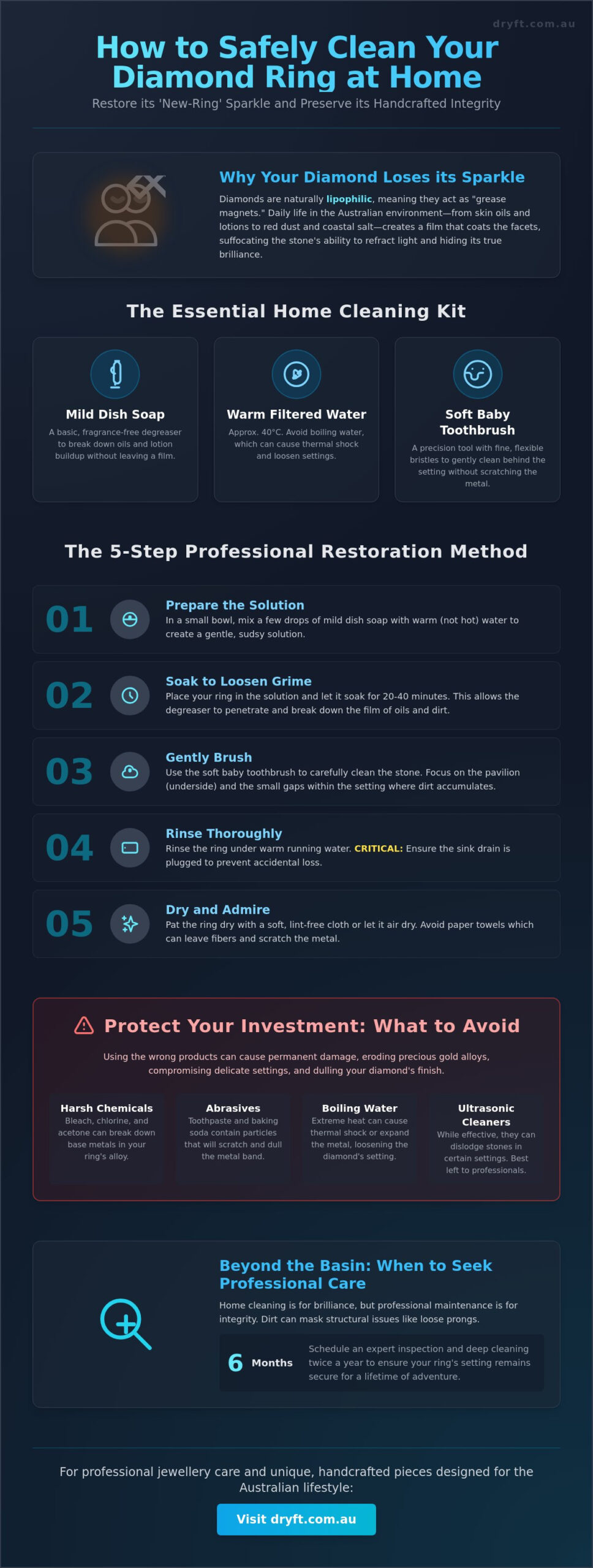
- Mild, fragrance-free dish soap: This is the diamond’s best friend. Avoid “ultra-strength” versions or those with heavy moisturisers. You need a basic degreaser that breaks down skin oils and lotion buildup without leaving a film.
- Warm filtered water: Temperature control is vital. Use water that’s comfortable to the touch, roughly 40 degrees Celsius. Boiling water can cause metal to expand rapidly, which might loosen the tension of your settings or damage heat-sensitive side stones.
- The soft-bristled baby toothbrush: This is your precision tool. The fine, flexible bristles are designed to reach the tight gaps behind the setting where light usually goes to die.
A diamond is one of the hardest substances on Earth, but the precious metals holding it in place are surprisingly ductile. Experts agree that gentle methods are best, as noted in the GIA’s guide to cleaning diamond rings, which highlights that simple soaking is often more effective than aggressive physical force. This approach preserves the high-polish finish of your 18k gold or platinum band.
Tools to Avoid at All Costs
The foundation of how to clean diamond ring at home safely lies in knowing what to exclude. Never use abrasive sponges or scourers. These will create micro-scratches on the surface of the metal, dulling the lustre over time. Similarly, paper towels should stay in the pantry. They are made from wood pulp and are surprisingly coarse for high-polish gold surfaces. Use a clean microfibre cloth or let the piece air dry instead.
The most critical safety step is the drain plug rule. This is a non-negotiable protocol for every clean. Always perform your soak inside a dedicated bowl, never directly over an open sink. Even if you think the plug is secure, a 1.0-carat stone can easily disappear into the plumbing during a rinse. Secure your workspace first to ensure your unbound lifestyle remains focused on the next horizon rather than a call to a plumber. One simple slip can turn a five-minute maintenance task into a costly recovery mission.
A Step-by-Step Guide to Cleaning Your Diamond Ring Safely
Excellence isn’t just about the initial build. It’s about the standard of maintenance you uphold. Just as a high-performance chassis requires regular inspection after a trek through the Kimberley, your diamond demands a systematic approach to maintain its refractive brilliance. Understanding how to clean diamond ring at home safely ensures that the grit of daily life doesn’t dull the sanctuary of your stone’s fire. This process is about breaking down molecular bonds without compromising the structural integrity of the metal.
Step 1 & 2: The Gentle Soak and Precision Brush
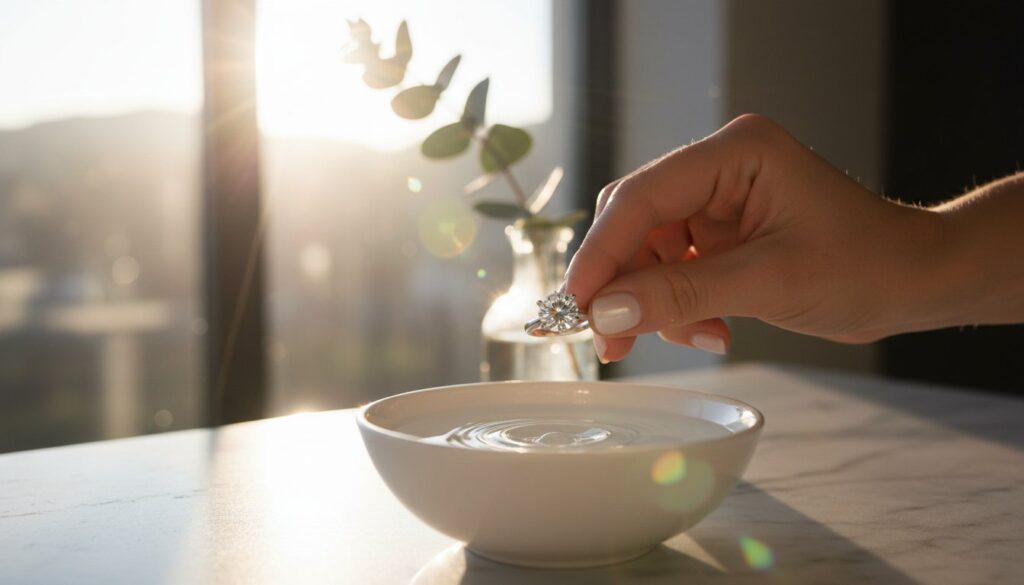
Restoration begins with a controlled environment. Fill a small glass bowl with warm water, approximately 40 to 45 degrees Celsius. Add two drops of a mild, fragrance-free dish detergent. Avoid harsh chemicals or bleach, as these can erode the alloy in your gold or platinum settings. Submerge your jewellery and commit to the 20-minute rule. This duration allows the solution to penetrate the microscopic gaps between the stone and the setting, softening the accumulated oils and organic debris.
Once the soak is complete, precision is paramount. Use a new, ultra-soft bristled toothbrush to gently agitate the remaining residue. Focus your efforts on the underside of the diamond and the pavilion facets, where light enters and exits the stone. Use small, circular motions. High-pressure scrubbing is unnecessary and can potentially loosen a stone if the setting has been compromised by wear.
- The Solution: Use only mild detergents to protect the metal’s finish.
- The Underside: This area collects 85% of debris, including lotions and skin oils.
- The Bristles: Ensure they are soft to avoid micro-scratches on softer metals like 18k gold.
Step 3 & 4: Rinsing and Finishing
The transition from cleaning to finishing requires a clean break from contaminants. Never rinse your ring directly over an open sink drain. Instead, use a separate bowl filled with fresh, room-temperature water. This eliminates the risk of a catastrophic loss while ensuring every trace of soap is removed. Residual soap acts as a magnet for dust, which will quickly dull the diamond’s appearance if not properly flushed away.
Achieving a showroom finish depends on your drying technique. A lint-free microfibre cloth is the industry standard. Avoid paper towels or tissues, as their wood-pulp fibres can leave microscopic scratches on the metal surface. Pat the ring dry to remove the bulk of the moisture, then allow it to air-dry for 10 minutes to ensure no water remains trapped in the setting. This prevents water spots that can cloud the metal’s lustre.
The Inspection: Securing Your Investment
The final stage is a technical audit. Once the ring is dry, hold it close to your ear and give it a very gentle shake. If you hear a faint clicking sound, the stones are loose. Use a magnifying glass to inspect the prongs. This is particularly vital for bespoke engagement rings where the engineering is precise and tailored. If you notice any movement or thinning metal, seek a professional jeweller immediately. Knowing how to clean diamond ring at home safely is your first line of defence in preserving a lifetime of adventure and elegance.
Home Remedies to Avoid: Protecting the Integrity of Your Setting
You wouldn’t subject a precision-engineered hybrid caravan to a salt marsh without understanding the corrosive risks. Your jewelry requires the same level of technical respect. While looking for how to clean diamond ring at home safely, you’ll encounter various DIY shortcuts. Most are dangerous. These methods often compromise the structural integrity of the metal or the security of the stones. Genuine restoration isn’t about quick fixes; it’s about maintaining the sanctuary of your investment with the right tools.
Vinegar and baking soda are frequent culprits in bad advice. The chemical reaction between an acid and a base is far too volatile for delicate prongs. This effervescence can actually force microscopic debris deeper into the setting rather than removing it. Similarly, home ultrasonic cleaners present a hidden gamble. The high-frequency vibrations that dislodge dirt can also vibrate pavé stones right out of their seats. Professional-grade machines are used with expertise, but a cheap home version often leads to a lost diamond during your next adventure.
Common Myths That Damage Diamonds
Toothpaste is perhaps the most persistent myth in the jewelry world. While it makes your teeth shine, the abrasives like silica and calcium carbonate are too harsh for precious metals. These particles create micro-scratches that permanently dull the lustre of gold. Over time, your ring loses that mirror-like finish that defines luxury craftsmanship. Boiling water is another hazard often overlooked. Thermal shock is the rapid change in temperature that causes a material to expand or contract unevenly, leading to structural fractures. This can shatter a diamond with internal inclusions or destroy more sensitive accent stones instantly.
The Chemical Danger Zone
Chlorine is the primary enemy of white gold alloys. In Australian backyard pools or coastal retreats, chlorine exposure causes stress corrosion cracking. This chemical process literally eats through the alloys, weakening the prongs until they snap without warning. It also strips the rhodium plating, leaving your ring looking yellowed and aged. Acetone and harsh industrial solvents are equally destructive. They can dissolve the protective coatings on treated gems or ruin the resins sometimes used in vintage settings.
Maintaining ethical jewelry in Australia is about more than just aesthetics; it’s about honouring the journey of the piece. Using the wrong chemicals ignores the engineering that went into its creation. Stick to mild, pH-neutral solutions to ensure your ring remains as resilient as your spirit of discovery. If you want to learn more about how to clean diamond ring at home safely without these risks, follow our proven protocols for long-term care.
Beyond the Basin: When to Seek Professional Maintenance
Mastering the art of how to clean diamond ring at home safely is your first line of defence against the grit of the Australian landscape. It keeps the fire in your stone alive between adventures. However, home maintenance is only half the battle. Just as a high-performance 4×4 requires a logbook service every 10,000 kilometres, your handcrafted ring demands a professional audit every 6 months. This 180-day interval ensures that the structural integrity of your piece remains as robust as the day it left the workshop.
Professional servicing identifies issues that are invisible to the naked eye. We look for the microscopic shifts caused by the vibrations of a corrugated track or the accidental knock against a granite outcrop. Our Dryft ‘Sanctuary’ Service utilises industrial-grade ultrasonic technology and high-pressure steam. These tools reach deep into the complex architecture of the setting, removing compacted residues that a toothbrush simply cannot budge. It is a total restoration of your ring’s engineered brilliance.
The Professional Inspection Checklist
A professional inspection is a technical deep dive into the health of your jewellery. We focus on three critical areas to ensure your legacy lasts for generations:
- Prong tension: We check for ‘snagging’ on fine fabrics or hair. If a claw catches, it indicates a loose stone. We use 10x magnification to ensure every diamond is secure within its cradle.
- Metal thinning: Over years of wear, gold and platinum bands naturally lose microns of metal. We identify signs of long-term thinning on the base of the shank before it leads to a structural failure.
- Professional polishing: Home soaps remove oils, but they cannot erase surface abrasions. Our master jewellers restore the mirror-finish that reflects the vast Australian horizon, removing the tiny scratches accumulated on the trail.
Your Partner in Adventure
Professional servicing is more than a cleaning ritual. It’s a strategic investment in the future of your jewellery. You wouldn’t take a luxury hybrid across the Simpson Desert without a pre-trip inspection, and your ring deserves the same level of technical respect. While knowing how to clean diamond ring at home safely handles the dust of the day, our workshop handles the demands of a lifetime.
We specialise in the transition from the dusty trail to the premium, polished interior. Our goal is to ensure your ring feels like a sanctuary on your finger, regardless of the environment outside. By combining your diligent home care with our technical expertise, you protect the craftsmanship of your piece. We invite you to join the Dryft community of sophisticated trailblazers. Let us maintain the gear that symbolises your most significant journeys, ensuring it remains unbound by time or terrain.
Preserving Your Brilliance for the Road Ahead
Your diamond ring is a sanctuary of memories. It’s designed to withstand the grit of the Australian landscape while maintaining its refined brilliance. Mastering how to clean diamond ring at home safely requires little more than mild detergent, warm water, and a soft-bristled brush to remove the film of daily adventure. Avoid abrasive home remedies like toothpaste or bleach. These can compromise the structural integrity of your setting or dull the metal finish. Regular home care keeps your jewellery ready for the horizon, but professional inspections every 12 months are vital to ensure every prong remains secure against the vibration of the road.
At Dryft, we bring the same expert handcrafted precision to jewellery restoration as we do to our premium off-road campers. We understand that quiet luxury maintenance for the modern adventurer means balancing rugged capability with delicate care. Our workshop provides a level of Australian-made authenticity that ensures your most precious items are treated with the respect they deserve. Discover our Professional Jewellery Care & Repair Services. Keep your treasures as resilient and radiant as the landscapes you explore.
Frequently Asked Questions
Is it safe to clean my diamond ring with dish soap every day?
Yes, it’s perfectly safe and highly recommended to use mild dish soap daily to maintain your ring’s brilliance. This routine effectively removes 95% of daily oils, skin lotions, and grease that accumulate and dull the stone’s fire. For those learning how to clean diamond ring at home safely, a simple soak in warm water with two drops of pH-neutral detergent ensures the metal’s integrity remains uncompromised. It’s a pragmatic approach to luxury maintenance that keeps your sanctuary of light sparkling.
Can I use an ultrasonic cleaner at home for my engagement ring?
You can use an ultrasonic cleaner, but it requires caution for certain settings and stone types. These machines use high-frequency sound waves, often reaching 42,000 Hz, to create cavitation bubbles that dislodge deep-seated grit. While effective, the intense vibration can loosen small pave stones or shake out diamonds with existing structural flaws. Reserve this method for solid solitaire settings and limit use to once a month to protect the engineering of your piece.
Will cleaning my ring at home loosen the diamond?
Cleaning your ring at home doesn’t loosen the diamond, but it often reveals a setting that was already compromised. Grime and hardened lotion act like a temporary cement, holding a loose stone in place through sheer friction. When you remove this debris, you might notice a 1mm rattle or slight movement in the prongs. It’s vital to inspect your settings after every session to ensure the diamond remains secure in its metal chassis.
How often should I professionally service my diamond ring?
You should seek a professional service and inspection every 6 to 12 months to ensure long-term durability. Australian jewellers typically charge between A$60 and A$150 for a comprehensive “check and polish” service. This professional touch ensures the structural integrity of your ring is sound and the prongs are tight. It’s a necessary investment for any high-end piece that faces the rigours of an active, unbound lifestyle.
Can I use gin or vodka to clean my diamond ring like people suggest?
High-proof clear spirits like gin or vodka are effective for breaking down stubborn organic oils because of their high ethanol content. The alcohol, typically at 40% concentration or higher, acts as a solvent that leaves no residue upon evaporation. Simply soak the ring for 2 minutes and rinse with warm water. It’s a seasoned explorer’s trick for a quick restoration when you’re away from your standard cleaning kit and need a seamless shine.
What should I do if my diamond still looks cloudy after cleaning?
If your diamond remains cloudy, it likely has a buildup of hard water minerals or requires a professional deep clean. Surface films from calcium or magnesium in Australian tap water can require a specialized soak in a 50/50 mix of water and white vinegar. If the cloudiness persists, 85% of cases require a professional steam clean to restore the stone’s original light performance. This process removes the microscopic layers of film that household detergents can’t touch.
Is it safe to clean a diamond ring with a gold-plated band?
You must be extremely gentle with gold-plated bands as the gold layer is often only 0.5 to 2.5 microns thick. Frequent scrubbing or harsh chemicals will strip this thin coating, exposing the base metal underneath and ruining the aesthetic. To clean these pieces, avoid brushes entirely. A 5-minute soak in warm, soapy water followed by a soft pat dry is the only way to preserve the finish without causing premature wear to the exterior.
What happens if I accidentally use toothpaste on my ring?
Toothpaste contains abrasive particles like silica that can create permanent micro-scratches on gold and platinum surfaces. While diamonds rank as a 10 on the Mohs scale, precious metals are much softer, often ranking between 2.5 and 4. If you’ve used toothpaste, rinse it immediately with plenty of fresh water to stop the abrasion. Repeated use will dull the mirror-like polish of the band, eventually requiring a professional buffing to restore the original lustre of the metal.