Why does your most cherished accessory often fail the moment it meets the Australian elements? It’s a frustrating reality for many adventurers who find that a single afternoon in the salt spray of the Pacific or the humidity of the Top End ruins their gold staples. Finding jewelry that doesn’t tarnish australia requires moving beyond the surface level of mass-produced fashion and looking toward pieces engineered for durability. With a 25% upward trend in alternative metals and design-led pieces recorded in 2025, it’s clear that Australians are tired of wasting money on plating that fades within weeks.
You deserve a sanctuary of style that matches your rugged lifestyle, whether you’re navigating a dusty trail or enjoying a coastal sunset. We understand that jewelry should be an uncompromising partner in your journey, not a delicate liability that causes skin irritation. This guide will show you how to identify high-grade materials like 316L stainless steel and PVD plating that actually survive our harsh climate. We’ll explore the difference between temporary coatings and everlasting handcrafted luxury, ensuring your next investment, like the Pearl String Bracelet or the Baroque Pearl Drop Earrings, maintains its luster from the outback to the ocean.
Key Takeaways
- Identify the specific environmental triggers, such as coastal salt air and oxidation, that compromise standard alloys in the Australian wild.
- Understand the technical engineering behind PVD plating and solid gold to create a personal sanctuary of durable, high-end accessories.
- Learn how to select jewelry that doesn’t tarnish australia by prioritizing industrial-grade integrity over temporary surface coatings.
- Implement the “Rinse and Dry” maintenance protocol to safeguard your handcrafted pieces from the corrosive effects of ocean and pool exposure.
- Discover why handcrafted construction is essential for a hybrid lifestyle, ensuring your pieces withstand both the rugged outback and refined social settings.
Why Most Jewelry Tarnishes in the Australian Climate
Australia is a land of beautiful extremes. From the salt-heavy breezes of the Gold Coast to the oppressive humidity of the Daintree, our environment is a relentless testing ground for everything we wear. Most people invest in accessories that look brilliant under showroom lights but fail within days of real-world exposure. This degradation isn’t just bad luck. It’s a predictable chemical failure. When you’re searching for jewelry that doesn’t tarnish australia, you aren’t just looking for a brand name. You’re looking for engineering that respects the harsh realities of our landscape.
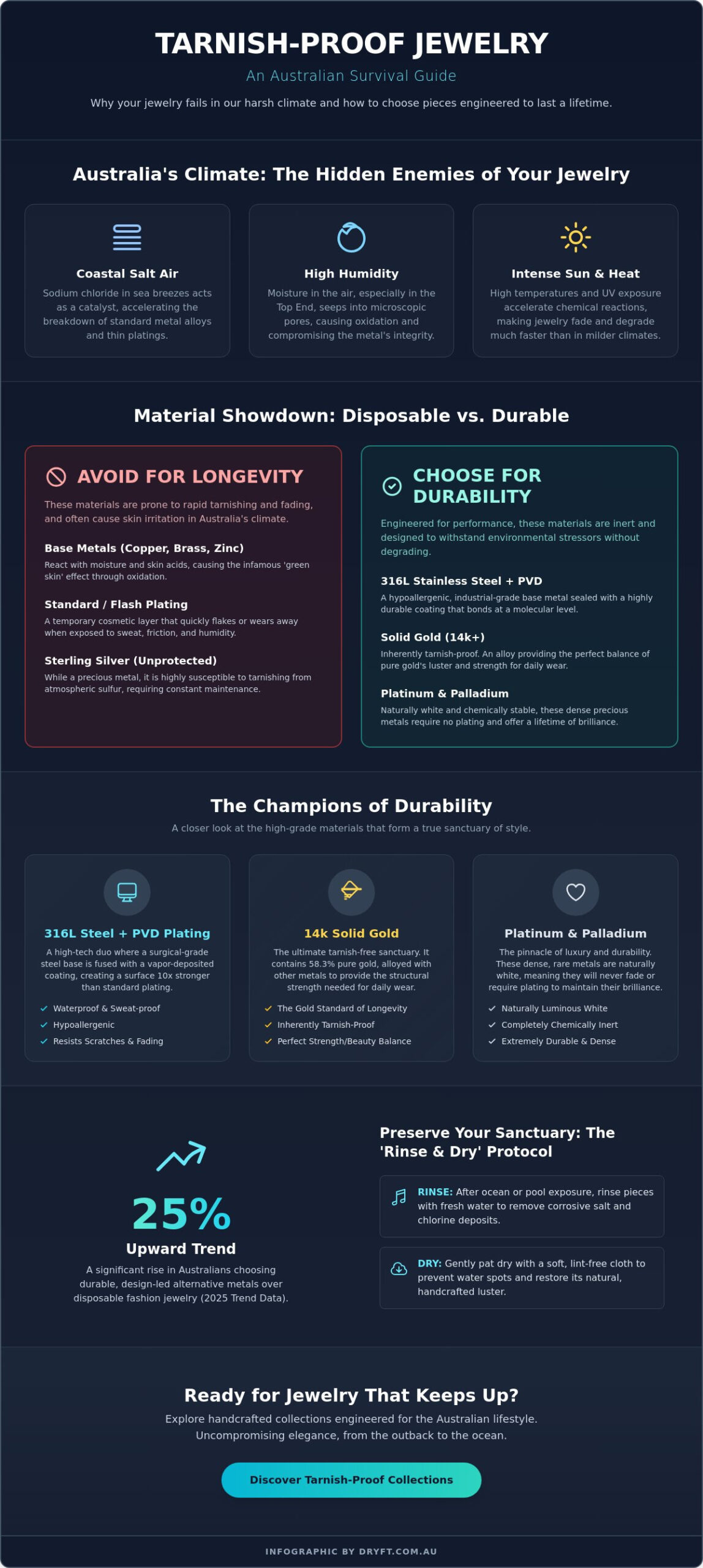
Standard pieces often rely on thin coatings over reactive base metals. When you step onto the sand, the sodium chloride in the air acts as a catalyst. It accelerates the breakdown of the metal surface. Humidity and sweat are the hidden enemies of traditional gold plating. They seep into the microscopic pores of the metal, causing the thin gold layer to flake or wear away. While many brands claim to be waterproof, this is often a marketing term rather than a technical standard. True durability requires a shift from disposable, fast-fashion pieces toward a permanent jewelry sanctuary.
The Chemistry of the Tarnish
Tarnish is the chemical reaction between metal and non-metallic elements like oxygen or sulfur. When base metals like brass, copper, or zinc are exposed to moisture, they undergo oxidation. This process creates a dull, dark layer that eventually transfers to your skin. That infamous greening effect is simply a byproduct of copper reacting with the acids in your sweat. To understand the deeper science, one can look at what causes jewelry to tarnish and how various alloys respond to atmospheric pollutants. These low-quality alloys are designed for climate-controlled rooms, not the Australian outback.
Australia’s Unique Environmental Challenges
Our coastline stretches over 25,000 kilometers, and most of us live within reach of the sea. Standard fashion jewelry is rarely engineered for this proximity to salt and high UV levels. The Australian summer test is brutal. High temperatures increase the rate of chemical reactions, meaning your favorite necklace might fade twice as fast in January as it would in July. You need accessories that can handle the transition from a dusty trail to a premium interior without losing their brilliance. Moving away from disposable pieces means choosing materials that refuse to react to the air, no matter how harsh the horizon looks.
Materials That Refuse to Fade: A Technical Comparison
Selecting materials that survive the Australian coast requires a technical eye. While sterling silver is a classic choice, it remains fundamentally susceptible to atmospheric sulfur. Rhodium plating can offer a temporary shield, but in a high-friction environment, that layer eventually wears thin. For those seeking jewelry that doesn’t tarnish australia, the solution lies in inert metals or high-performance coatings that refuse to react with salt air. Platinum and palladium are naturally white, meaning they don’t require plating to maintain their brilliance. They are dense, chemically stable, and perfectly suited for a lifetime of exposure.
To ensure your investment holds its value, you should verify that your pieces meet industry standards for tarnish-resistant metals. These guidelines distinguish between temporary cosmetic finishes and true corrosion resistance. Understanding these technical baselines allows you to build a jewelry collection that functions as a reliable sanctuary rather than a collection of fading assets. Whether you’re exploring the coast or attending a gala, choosing handcrafted staples engineered for performance is the only way to ensure lasting luster.
Solid Gold: The Gold Standard of Longevity
Solid gold is the ultimate tarnish-free sanctuary. While 24k gold is too soft for the rigors of the outback, 14k gold offers the perfect balance of grit and glamour. It contains 58.3% pure gold, alloyed with other metals to provide the structural strength needed for daily wear. This is a significant leap in quality from gold-filled pieces, which only have a mechanical bond of gold over a base metal. This is why choosing bespoke engagement rings is a commitment to both design and structural integrity. A solid gold chassis ensures your most meaningful pieces never lose their character to oxidation.
Understanding PVD and Gold Vermeil
PVD (Physical Vapor Deposition) coating is the science of industrial-grade durability applied to luxury. Unlike traditional electroplating, PVD bonds gold at a molecular level within a vacuum. It creates a finish that is ten times thicker and far tougher than standard plating. This makes 316L stainless steel the preferred chassis for high-performance waterproof pieces. In contrast, Gold Vermeil is simply gold over a sterling silver core. While it looks luxurious, the silver beneath will eventually tarnish when exposed to the high humidity of the Australian summer. For a truly unbound lifestyle, PVD-engineered pieces offer the reliability you need to keep your jewelry that doesn’t tarnish australia looking pristine for years.
Handcrafted Integrity: Why Construction Matters as Much as Metal
Metal choice is only half the battle. Even the most resilient 14k gold or PVD-coated stainless steel can fail if the construction is compromised. Mass-produced jewelry often relies on machine-stamped joins and flimsy clasps that create microscopic entry points for corrosive elements. In the Australian wild, these gaps become magnets for salt spray and humidity. Handcrafted integrity ensures every join is a seamless barrier. It is the difference between a piece that survives a single season and one that becomes a permanent sanctuary.
The modern adventurer demands a hybrid lifestyle. Your jewelry should transition from the red dust of the outback to a gala in the city without a second thought. This requires accessories engineered for both grit and glamour. When you invest in jewelry that doesn’t tarnish australia, you are choosing a philosophy of movement and freedom. It is quiet luxury that refuses to be delicate. Dryft’s philosophy is rooted in this exact intersection, where high-end engineering meets the raw beauty of the wild.
The Strength of Bespoke Craftsmanship
Fast jewelry is designed for the shelf, not the trail. It lacks the structural density required to withstand the friction of an active life. By choosing ethical jewelry in Australia, you ensure a higher standard of metal purity and supply chain transparency. Handcrafted settings provide the necessary security for precious stones and organic gems. Each prong and bezel is adjusted by hand to ensure a flush fit. This precision prevents the buildup of grime and salt that eventually leads to surface decay and skin irritation.
Pearls: Nature’s Tarnish-Resistant Gem
Pearls are a unique asset in the world of luxury. While many metals are reactive, freshwater pearls actually thrive with regular wear. They absorb natural oils from your skin, which helps maintain their luster and prevents the nacre from drying out in the harsh Australian sun. Selecting handcrafted pearl jewelry allows you to embrace coastal elegance without the fear of environmental degradation. The Pearl String Bracelet is a prime example of structural resilience. It uses reinforced threading and precision-engineered clasps to ensure it remains a reliable partner on any horizon. This is outback-proven luxury, designed to remain unbound by the elements.
Preserving Your Sanctuary: Maintenance for Tarnish-Free Brilliance
Even the most robust chassis requires periodic maintenance to ensure peak performance. When you invest in jewelry that doesn’t tarnish australia, you’re securing a piece engineered for the long haul, but it isn’t immune to the buildup of the trail. Dust, salt, and skin oils can create a film that obscures the metal’s natural brilliance. Maintaining that engineered luster is a matter of simple, disciplined rituals that preserve your sanctuary. It’s about protecting the structural integrity of your investment so it remains as striking as the day you first wore it.
The “Rinse and Dry” rule is your primary defense against the elements. After a day in the surf or a dip in a chlorinated pool, salt and chemicals can linger in the small crevices of handcrafted joins. A quick rinse in fresh water followed by a thorough pat-down with a clean cloth removes these corrosive residues before they can settle. It’s a pragmatic step that ensures your luxury staples remain unbound by the environments they inhabit. When you aren’t wearing your pieces, store them in a dedicated, lined box. This limits exposure to environmental oxygen and prevents the nesting of chains that can lead to surface scratches.
Home cleaning doesn’t require harsh chemicals that might compromise the metal chassis. A solution of warm water and a few drops of mild, fragrance-free soap is often all that’s needed to lift stubborn grime. Soak your pieces for 10 to 15 minutes before gently scrubbing with a soft-bristled brush, focusing on the underside of settings where sweat and lotions tend to accumulate. This simple ritual, performed once a month, keeps the light reflecting perfectly off every surface. To ensure your collection stays adventure-ready, explore our range of handcrafted jewelry designed for the wild.
Daily Rituals for Long-Term Luster
Chemicals found in daily life are often more aggressive than the outback itself. Perfumes, lotions, and sunscreens contain compounds that can dull even the toughest high-grade metals over time. Applying these products and letting them dry before putting on your jewelry prevents a chemical film from bonding to the surface. Use a soft, lint-free cloth to buff your gold or PVD pieces weekly to maintain their engineered shine. For a deeper restoration, follow the steps in the ultimate jewelry care guide to safely remove stubborn grime without compromising the metal integrity.
Professional Maintenance and Repairs
Adventure takes a toll on even the most secure settings. While the metal chassis might remain tarnish-free, the physical impact of an active lifestyle can occasionally loosen a prong or a clasp. Professional maintenance every 12 months ensures the structural integrity of bespoke pieces. A jeweler can verify the security of diamond and pearl settings, preventing the loss of stones during your next off-road journey. Solid gold pieces also benefit from professional polishing, which removes microscopic surface wear and restores the deep, reflective glow of the metal. This annual check-up acts as a technical validation for your most cherished accessories.
Unbound Elegance: Discovering Dryft’s Tarnish-Resistant Collections
The search for jewelry that doesn’t tarnish australia ends where precision engineering meets the raw beauty of the wild. Dryft is more than a brand; it is a philosophy of movement and freedom designed for those who refuse to sacrifice luxury for performance. Our collections serve as a gateway for life-changing experiences, providing a sanctuary of style that remains untarnished by the elements. Every piece is a testament to outback-proven reliability, ensuring your aesthetic remains as sharp as your off-road performance. We provide the technical assurance so you can focus on the horizon.
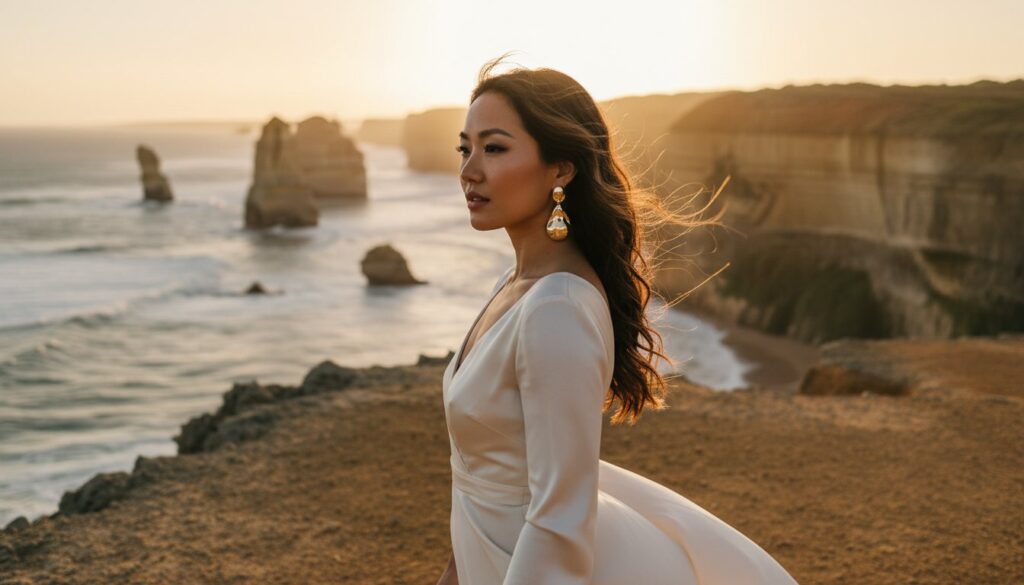
The Pearl String Bracelet represents the pinnacle of this rugged capability. It features reinforced threading and high-grade clasps that act as a reliable chassis for organic freshwater pearls. These aren’t delicate ornaments destined for a velvet box. They are tools for an unbound life, capable of transitioning from a coastal trek to a premium interior without losing their luster. Similarly, our Baroque Pearl Drop Earrings are statement pieces that defy the elements. Each set is handcrafted with secure settings that prevent the entry of corrosive salt air, ensuring the nacre remains brilliant through years of exposure.
For the trailblazer who requires a singular expression of their journey, our bespoke commissions offer the ultimate path to everlasting luxury. We collaborate with you to engineer a tarnish-free legacy using the high-performance materials discussed throughout this guide. This process ensures your jewelry is an uncompromising partner in adventure, built to the same global standards of premium branding as the rest of your kit. Whether you are navigating the red dust or the deep blue, Dryft is the partner for the modern Australian explorer.
The Everyday Essentials
Curating a collection that withstands the Australian summer requires a strategic approach to layering. You should focus on pieces that offer a seamless look while maintaining their material integrity against sweat and UV exposure. Layering tarnish-free necklaces allows you to build a sophisticated profile that remains comfortable in high-humidity environments. To master this balance of grit and glamour, check out our guide on how to style gold jewelry. It provides the technical framework for maintaining an elegant silhouette in the middle of nowhere.
The Gift of Lasting Luxury
With the Australian jewelry market projected to reach USD 3.69 billion by 2030, the shift toward durability is a clear mandate from conscious consumers. Tarnish-free jewelry is the ultimate anniversary or wedding gift because it represents a promise that doesn’t fade with time. It is a pragmatic investment in a permanent sanctuary. You can personalize your next milestone with handcrafted gift ideas that reflect a deep respect for craftsmanship and the wild. Explore the Dryft collection today and secure a piece of outback-proven luxury that remains unbound by the passage of time.
Secure Your Legacy of Unbound Brilliance
Your journey through the Australian landscape requires gear that matches your ambition. We’ve explored how molecularly bonded PVD coatings and solid 14k gold offer a technical sanctuary against the corrosive salt air of our 25,000-kilometer coastline. You now understand that true durability isn’t just about the metal chassis; it’s about the handcrafted integrity that prevents environmental oxidation from compromising your style. Choosing jewelry that doesn’t tarnish australia is a pragmatic decision for the modern adventurer who demands both grit and glamour in every environment.
Dryft stands at the intersection of high-end engineering and refined luxury. Every piece is handcrafted in Australia, utilizing ethically sourced freshwater pearls and diamonds to ensure your aesthetic remains as resilient as your spirit. It’s time to move beyond the cycle of fading plating and embrace a philosophy of movement and freedom. Discover the Dryft collection of tarnish-resistant handcrafted luxury and invest in pieces engineered for the modern adventurer. The horizon is calling, and your brilliance should never fade before you reach it.
Frequently Asked Questions
Is there any jewelry that actually never tarnishes?
Yes, solid gold and platinum are chemically inert and won’t tarnish under normal environmental conditions. These materials don’t react with oxygen or sulfur, which are the primary causes of metal decay. Investing in solid 14k or 18k gold provides a permanent sanctuary for your collection that survives the harshest Australian summers. It’s a technical assurance that your investment remains as brilliant as the day you found it.
Can I wear 14k gold in the shower or the ocean?
You can wear solid 14k gold in the ocean and the shower without any risk of the metal fading or corroding. It’s engineered for a hybrid lifestyle, allowing you to move seamlessly from the surf to the city. We recommend a fresh water rinse after ocean exposure to remove salt residues that might temporarily dull the finish. This simple ritual preserves the engineered luster of your most cherished staples.
What is the best metal for jewelry in Australia’s coastal humidity?
Solid 14k gold and PVD-coated 316L stainless steel are the premier choices for jewelry that doesn’t tarnish australia. These materials are specifically designed to withstand the high salt content and humidity found along our 25,000-kilometer coastline. They offer the technical reliability required for those who live an unbound life in the wild. Choosing these metals ensures your jewelry remains a sanctuary of style rather than a liability.
Does ‘waterproof’ jewelry mean it will never fade?
No, ‘waterproof’ is frequently a marketing term and doesn’t guarantee a piece won’t fade over time. While the metal might resist water, thin electroplated layers can still wear off due to friction or sweat acidity. True longevity comes from the molecular bonding of PVD or the chemical stability of solid precious metals. You should look for industrial-grade durability rather than surface-level claims when selecting your next piece.
How can I tell if my jewelry is high-quality or just plated?
Look for official hallmarks like ‘585’ for 14k gold or ‘950’ for platinum to verify the metal’s purity. High-quality pieces possess a distinct weight and density that mass-produced, gold-plated items lack. If a piece feels unusually light or shows a different metal color at the friction points, it’s likely a base metal chassis with a temporary coating. This distinction is vital for maintaining a collection that defies the elements.
What happens if my handcrafted jewelry from Dryft needs repair?
We provide comprehensive support for our handcrafted staples to ensure they remain your partners in adventure. If your Baroque Pearl Drop Earrings or Pearl String Bracelet require a technical check, our experts can restore the structural integrity of the piece. Regular maintenance every 12 months is the best way to safeguard your investment against the rigors of the trail. We focus on craftsmanship so your journey remains uninterrupted.
Is sterling silver a good option for tarnish-free wear?
Sterling silver is not a tarnish-free metal because its 7.5% copper content reacts with sulfur in the atmosphere. This reaction creates the dark film known as tarnish, which accelerates in humid coastal regions. While silver is a classic choice, it requires significantly more maintenance than solid gold or platinum to keep its reflective glow. For a truly low-maintenance sanctuary, inert metals provide a more reliable performance in the Australian climate.
Why does some gold jewelry turn my skin green but others don’t?
Skin greening is caused by the oxidation of base metals like copper or brass found in low-quality jewelry that doesn’t tarnish australia competitors. When these metals react with the acids in your sweat, they create a green byproduct that transfers to your skin. High-purity gold and surgical-grade stainless steel are hypoallergenic and won’t cause this reaction. Choosing engineered materials ensures your skin remains clear and your jewelry stays brilliant.