
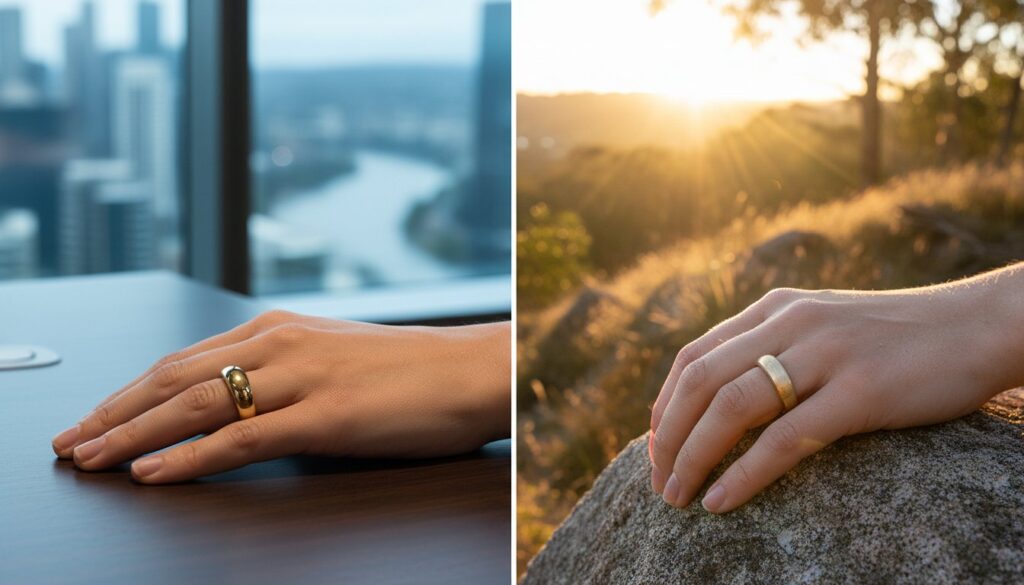
Would you take a A$6,200 heirloom into the red dust of the Pilbara if you knew it might warp before sunset? The most expensive option isn’t always the most resilient choice for an unbound life. When weighing up 14k vs 18k gold, the decision isn’t just about prestige; it’s about engineering a piece that survives your daily ritual. You deserve a sanctuary of style that doesn’t sacrifice its structural integrity the moment you leave the pavement or reach for your recovery gear.
We agree that your jewellery should be as uncompromising as your off-road setup. You shouldn’t have to choose between a refined aesthetic and the grit required for an active Australian lifestyle. This guide will help you discover the precise balance between elemental purity and rugged durability to select the gold karat that matches your specific journey. We’ll demystify the technical longevity of different alloys, finally settle the confusing karat versus carat terminology, and ensure you choose a metal tone that reflects your quiet luxury whether you are in a Sydney boardroom or the middle of nowhere.
Key Takeaways
- Master the elemental science of karats to understand why pure gold requires high-performance alloys to survive the rigors of a life well-lived.
- Evaluate the technical performance of 14k vs 18k gold by comparing Vickers hardness and tensile strength to ensure your stones remain secure through every adventure.
- Discern the sensory nuances between the deep, buttery warmth of high-purity gold and the crisp, resilient glow of more durable alloys.
- Conduct a personal lifestyle audit to find the perfect equilibrium between refined luxury and the rugged demands of the Australian outback.
- Discover how handcrafted techniques and ethical Australian sourcing elevate your choice into a lasting legacy of conscious luxury.
Understanding the Elemental Foundation: What is 14k and 18k Gold?
Gold in its purest form is a master of contradiction. While 24ct gold possesses an undeniable elemental allure, it’s far too soft for the rigours of a life lived unbound. It’s the metallurgical equivalent of a luxury sedan on a corrugated track; beautiful, but lacks the structural integrity to endure. To transform this raw material into a lasting sanctuary, jewelers blend it with harder metals. This creates a durable alloy capable of holding its form through decades of wear.
The karat system measures this purity across 24 distinct parts. In Australia, you’ll often see this marked as ‘ct’ (carat), though the ‘k’ (karat) notation remains the global standard for the 14k vs 18k gold debate. Master smiths typically introduce a blend of copper, silver, and zinc to achieve the desired resilience. Understanding Gold Alloys is vital because these additions don’t just provide strength; they dictate the final hue and character of the piece. In the Australian market, where the sun is harsh and the lifestyle is active, these alloys ensure your investment doesn’t lose its shape after a weekend in the elements.
The Anatomy of 14k Gold
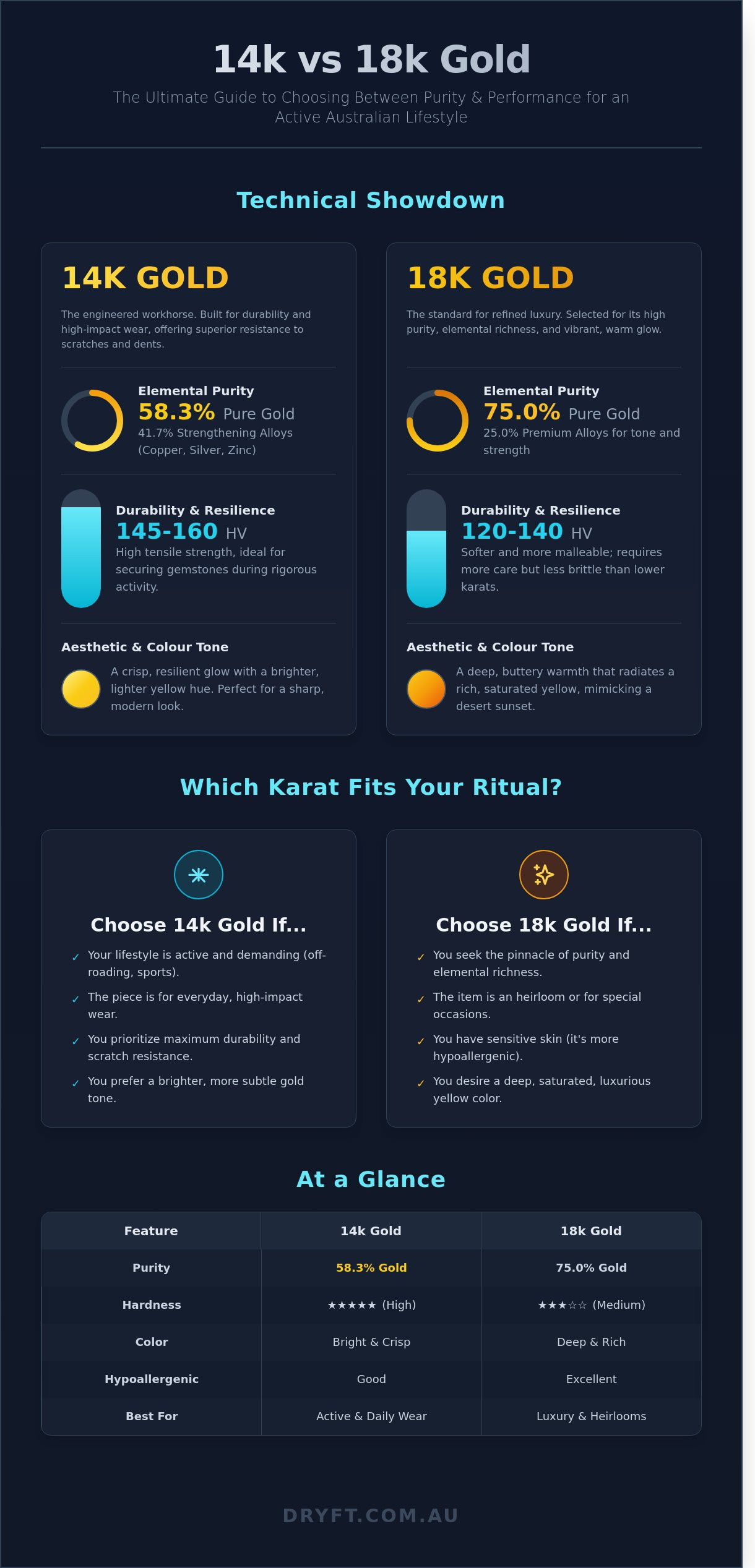
This is the engineered workhorse of fine jewellery. 14k gold consists of 58.3% pure gold and 41.7% alloy metals. It’s the rugged adventurer of the collection. Because it contains a higher percentage of base metals like zinc and copper, it offers superior resistance to scratches and dents. It’s the ideal choice for everyday staples, including high-movement pieces like gold herringbone necklaces that require both flexibility and high tensile strength to survive 2026’s fast-paced environments.
The Anatomy of 18k Gold
18k gold represents a shift toward refined luxury and elemental richness. With a technical composition of 75% pure gold and 25% alloy, it sits at a higher tier of prestige. The metal feels heavier on the skin. It radiates a deeper, more saturated yellow that mimics the sun setting over a desert horizon. While it requires slightly more care than its 14k counterpart, it remains the standard for bespoke commissions and heirloom investments. Choosing between 14k vs 18k gold involves balancing this elemental richness against your personal pace of life.
- 14k Gold: 14 parts gold, 10 parts alloy. Built for durability and high-impact wear.
- 18k Gold: 18 parts gold, 6 parts alloy. Selected for its high purity and vibrant, warm glow.
- Standard Alloys: A mix of silver, copper, and zinc used to calibrate hardness and colour.
Purity vs. Performance: The Technical Comparison
Selecting the right alloy requires a deep dive into the mechanical properties that define how your jewellery survives the years. The primary distinction in the 14k vs 18k gold debate lies in the ratio of pure gold to stabilizing alloys. Understanding What ‘Karat’ Means is the first step in decoding these performance metrics. Pure 24k gold is too soft for daily wear, so we look to the Vickers hardness scale to measure resistance to indentation. Typically, 14k gold alloys register between 145 and 160 HV, while 18k gold usually sits between 120 and 140 HV. This 15 percent difference in hardness impacts how the metal handles the friction of a life lived outdoors.
Tensile strength also dictates how well a setting protects a gemstone over decades. 14k gold is more rigid; it resists bending under pressure. However, 18k gold offers superior malleability, which prevents the metal from becoming brittle. For those with sensitive skin, the hypoallergenic factor is a deciding weight. Because 18k gold is 75 percent pure, it contains fewer base metals like nickel or copper. This higher purity reduces the risk of dermatological reactions during long hauls in humid climates.
- 14k Gold: 58.5% purity, higher zinc/copper content, approximately 155 Vickers hardness.
- 18k Gold: 75% purity, richer yellow hue, approximately 130 Vickers hardness.
- Wear Factor: Gold thins over generations as microscopic layers are buffed away by skin contact and fabric.
Durability and Resilience in the Field
In the rugged terrain of the Australian outback, 14k gold acts as a functional shield. It resists the deep gouges and scratches that occur during off-road recoveries or gear adjustments. 18k gold is a softer sanctuary; it’s more prone to “bruising” during high-impact activities like heavy lifting or technical climbs. Work hardening occurs when the metal’s crystalline structure is compressed through physical manipulation; this process increases the finished piece’s surface hardness and structural resilience. For the active explorer, 14k provides a mechanical advantage that keeps the finish looking sharper for longer.
Longevity and Structural Integrity
Despite its relative softness, 18k is frequently the standard for bespoke engagement rings because of its luxurious weight and rich colour. It feels substantial on the hand, projecting a sense of quiet luxury. While 14k prongs are harder to move, they can occasionally snap if they become too brittle over twenty years. 18k prongs tend to bend rather than break, allowing a jeweller to service the setting without replacing the entire head. Maintenance is a non-negotiable reality of ownership. You should expect to have your 18k claws checked every 12 to 18 months, whereas 14k settings might stretch that interval to 24 months. From a financial perspective, 18k gold serves as a superior sanctuary for value, as its higher gold content tracks more closely with the global spot price. If you value a piece that balances engineering with elegance, explore how Dryft approaches the philosophy of enduring craftsmanship.
The Aesthetic Choice: Colour, Tone, and Sensory Appeal
The visual distinction between 14k vs 18k gold is often the first thing a collector notices. It’s a choice between two distinct personalities. 18k gold, comprised of 75% pure gold, radiates a deep, buttery warmth that feels traditional and opulent. It captures light with a rich saturation that’s difficult to replicate. In contrast, 14k gold contains 58.3% pure gold; this higher percentage of alloy metals results in a more subtle, bright glow. It’s less “yellow” than its higher-karat counterpart, offering a modern, understated aesthetic that fits a rugged lifestyle without looking out of place.
Alloys don’t just change the karat; they dictate the entire colour profile of your piece. In rose gold, 14k versions often lean toward a sharper, pinker “blush” due to the higher copper content. 18k rose gold is softer, appearing more like a warm peach or “champagne” hue. White gold also shifts; 14k white gold maintains a crispness because there’s less yellow gold to “bleach” with rhodium. The Australian sun is a harsh critic of these tones. Under the high-noon glare of the outback or the salty haze of the coast, 18k yellow gold maintains its depth, while 14k can sometimes appear slightly paler.
The sensory experience is where the engineering of the metal truly shines. Gold is a dense, heavy element. Because 18k contains more of it, the metal feels noticeably heavier on the skin. It possesses a “heft” that signals quality and substance. When you’re moving from a dusty trail to a refined dinner, that weight serves as a constant, tactile reminder of the craftsmanship you’re wearing.
Colour Saturation and Skin Tone
18k yellow gold is the premier choice for warmer, sun-kissed skin tones. Its high saturation complements the golden undertones of a summer tan. For those who prefer a more curated, complex look, the paler profile of 14k gold offers incredible versatility for necklace layering. It provides a neutral base that doesn’t overwhelm other accessories. Whether you’re dressing for a remote campsite or a boardroom, ensure your choice aligns with your existing style of gold jewellery to maintain a cohesive, sophisticated aesthetic.
The Patina of Time
Over years of adventure, 18k gold develops a unique “glow” known as a patina. It doesn’t just age; it evolves. In coastal environments, high-karat gold is naturally more tarnish-resistant because it contains fewer base metals like copper or silver that react with salt air. While 14k is tougher, its higher alloy content means it might require more frequent polishing to keep its original lustre. For the modern explorer, 18k represents a low-maintenance luxury that stands up to the elements while gaining character through every journey.
The Lifestyle Audit: Which Karat Fits Your Daily Ritual?
Selecting the right metal is an exercise in engineering your personal aesthetic. It requires an honest look at your “Hybrid” lifestyle. This is the space where the polished demands of a professional career meet the grit of the Australian outdoors. Your jewellery shouldn’t be a liability when you transition from a city office to a remote campsite. It must endure the friction of a life lived at full throttle. Choosing between 14k vs 18k gold is less about status and more about matching a metal’s physical properties to your daily movement.
The “Hands-On” test is your primary diagnostic tool. Consider your physical activity levels over a standard 168-hour week. If your hands are constantly engaged in high-impact tasks, such as handling recovery gear or gripping a mountain bike’s handlebars, durability is your priority. 14k gold, comprised of 58.3% pure gold and 41.7% alloy, offers a structural resilience that 18k gold cannot match. Conversely, if your daily ritual is more sedentary, the 75% gold content of 18k provides a prestige that rewards the wearer with a deeper, richer glow.
Budgetary logic in the Australian market also dictates the final choice. As of 2026, the price premium for an 18k gold piece typically ranges from A$350 to A$900 more than a 14k equivalent, depending on the weight. It’s a balance between the desire for higher purity and the practical limits of your investment. You’re choosing between a “forever staple” built for the trail and an occasional statement piece designed for the sanctuary.
Choosing 14k for the Modern Adventurer
14k gold is the engineered solution for the relentless explorer. It’s the ideal choice for those who refuse to remove their jewellery during sport, coastal travel, or mechanical work. Because it contains a higher percentage of zinc and copper, it resists scratches and deformation far better than higher karats. This makes it the superior option for delicate chains and high-friction bracelets that encounter constant movement. It represents the perfect intersection where practicality meets luxury, offering a high-end look without the fragility.
Choosing 18k for Refined Sophistication
18k gold is reserved for significant milestones and collectors of “quiet luxury.” It’s best suited for earrings, pendants, and necklaces that sit close to the skin and face less physical impact. The higher gold concentration results in a vivid, buttery yellow that remains untarnished by the elements. 18k gold remains the definitive global benchmark for heritage jewellery houses because it offers the richest saturation of colour while maintaining just enough alloyed strength to secure high-value gemstones. It’s a choice for those who value the legacy of the metal as much as its appearance. For those seeking a heritage piece that balances tradition with modern durability, consider exploring the signet ring as a timeless symbol that can withstand the demands of contemporary adventure.
Ready to find a piece that matches your pace? Discover our collection of outback-proven luxury and choose the karat that suits your journey.
Investing in Handcrafted Quality: The Dryft Perspective
Choosing between 14k vs 18k gold is more than a technical tally of alloy percentages. It’s a commitment to how a piece of jewelry survives the life you lead. At Dryft, we view jewelry through the same lens as high-end off-road engineering. It must be resilient, beautiful, and capable of weathering the elements. While 18k gold contains 75% pure gold and 14k contains 58.3%, the true strength of the metal comes from how it’s handled. Our artisans use traditional hand-forging techniques to compress the grain structure of the gold. This process makes our 18k pieces significantly more dense and durable than mass-produced, cast alternatives found in high-street retailers.
Integrity is the foundation of every piece we create. We prioritize ethical jewelry in Australia because the origin of your metal defines its worth as much as its karat. Australia produces approximately 10% of the world’s gold, and we ensure our sourcing reflects a respect for the land we explore. This ethical stance remains unchanged whether you choose the rugged utility of 14k or the rich, buttery glow of 18k.
When we pair these metals with Australian South Sea pearls, material compatibility becomes a science. The 18k alloy offers a visual warmth that mirrors a pearl’s natural luster. However, we engineer the settings with precision to ensure the softer 18k gold provides a secure, lifelong sanctuary for the gem. It’s a balance of grit and glamour that ensures your investment remains an uncompromising partner on your journey.
Craftsmanship Over Mass-Production
The “rugged luxury” of Dryft isn’t an accident; it’s the result of superior metal engineering. Mass-market jewelry often relies on thin, hollow casting that fails under pressure. We reject this. Our bespoke designs mitigate the natural softness of 18k gold by using deliberate thickness and reinforced stress points. For custom commissions, our team spends upwards of 40 hours hand-refining a single piece. We help you choose the right karat based on your lifestyle, ensuring your ring or pendant can handle a dusty trail as easily as a premium interior.
Your Next Steps in the Golden Journey
Selecting your forever metal is a personal milestone. We recommend consulting with a master jeweller at our studio to discuss the specific demands of your daily adventures. Before you decide, review our jewelry care guide to understand the maintenance profiles of different alloys. Whether you’re drawn to the enduring toughness of 14k or the elite status of 18k, the Dryft collection offers a gateway to life-changing experiences. Explore our range today and find a piece that speaks your language of freedom.
Forge Your Path With a Metal That Endures
Deciding between 14k vs 18k gold isn’t merely a matter of cost; it’s a strategic choice for your personal legacy. If your journey involves the grit of the trail, 14k gold provides a 58.3% purity level engineered for maximum durability and scratch resistance. For those who seek the ultimate sanctuary in design, 18k gold offers a 75% purity that delivers a richer, more evocative tone. Every piece we create at Dryft reflects a commitment to ethically sourced Australian craftsmanship, blending the mechanical excellence of rugged luxury with a refined aesthetic that transcends the 2026 season.
We believe your jewellery should be as uncompromising as your spirit. Our bespoke design consultations are available to help you navigate these technical nuances, ensuring your selection fits your unique daily ritual. Explore our handcrafted 14k and 18k gold collections to find a piece that mirrors your own quiet confidence. It’s time to invest in a metal that’s as unbound and resilient as the Australian horizon. Your story is still being written; make sure it’s told in a metal that can keep up.
Frequently Asked Questions
Is 14k gold real gold or just a plated alloy?
14k gold is authentic solid gold, not a plated substitute. It consists of 58.3% pure gold and 41.7% alloy metals like copper or silver. This engineered blend provides the structural integrity needed for an active lifestyle. Unlike gold-plated items that typically wear down to the base metal within 12 months, 14k gold maintains its composition through decades of rigorous wear.
Can you wear 18k gold every day without damaging it?
You can wear 18k gold daily, though it requires a more mindful approach than its lower-karat counterparts. Since 18k gold contains 75% pure gold, it’s naturally softer and more prone to surface scratches. It’s a premium choice for those who appreciate a refined finish. For high-impact activities like rock climbing or gym sessions, we recommend removing 18k pieces to prevent deformation of the metal.
Why does 14k gold sometimes irritate sensitive skin more than 18k?
Skin irritation usually stems from the 41.7% alloy content found in 14k gold, which often includes nickel or zinc. These base metals can react with sweat and oils, causing contact dermatitis in roughly 15% of the Australian population. 18k gold acts as a superior sanctuary for sensitive skin. Its 75% purity level significantly reduces the presence of potential allergens, offering a more seamless and comfortable experience for the wearer.
Does 18k gold tarnish faster than 14k gold in salt water?
14k gold actually faces a higher risk of tarnishing in salt water due to its higher concentration of base metals. Pure gold is chemically inert and won’t tarnish, but the 41.7% copper or silver in 14k can react with salty air to form a dull patina. When comparing 14k vs 18k gold for coastal living, 18k offers better chemical resistance. We suggest rinsing your jewellery in fresh water after every beach excursion to maintain its lustre.
Is 14k or 18k gold better for an engagement ring setting?
14k gold is the pragmatic choice for securing precious stones because its alloy mix makes it harder and more rigid. It provides a tough chassis for diamonds, ensuring prongs don’t bend easily during daily tasks. 18k gold offers a richer, more luxurious yellow hue that many find aspirational. Choosing between 14k vs 18k gold for a ring depends on whether you prioritise maximum durability or premium aesthetic depth.
How can I tell the difference between 14k and 18k gold by looking at it?
The most immediate visual cue is the saturation of the yellow hue. 18k gold displays a deep, buttery glow because of its 75% gold content. 14k gold appears slightly paler and more subdued. You should also look for the hallmark stamp inside the band. In Australia, 14k is often stamped with “585,” while 18k is marked with “750,” representing the parts of gold per thousand.
Which karat of gold has a better resale value in Australia?
18k gold consistently commands a higher resale value because it contains 16.7% more pure gold than 14k. When selling to Australian refineries or gold buyers, your payout is calculated based on the spot price and the weight of pure gold content. A 10-gram 18k chain contains 7.5 grams of pure gold, whereas a 14k chain of the same weight only contains 5.83 grams. This makes 18k a more solid financial store of value over time.
Is 18k gold worth the extra cost for everyday jewellery?
18k gold is worth the investment if you value the “quiet luxury” of a richer colour and a more hypoallergenic metal. Expect to pay a premium of 30% to 50% more for 18k compared to 14k in the Australian market. For those exploring the rugged outback, 14k provides the reliability and toughness required for harsh environments. However, for a forever piece that sits at the intersection of grit and glamour, 18k remains the gold standard.