
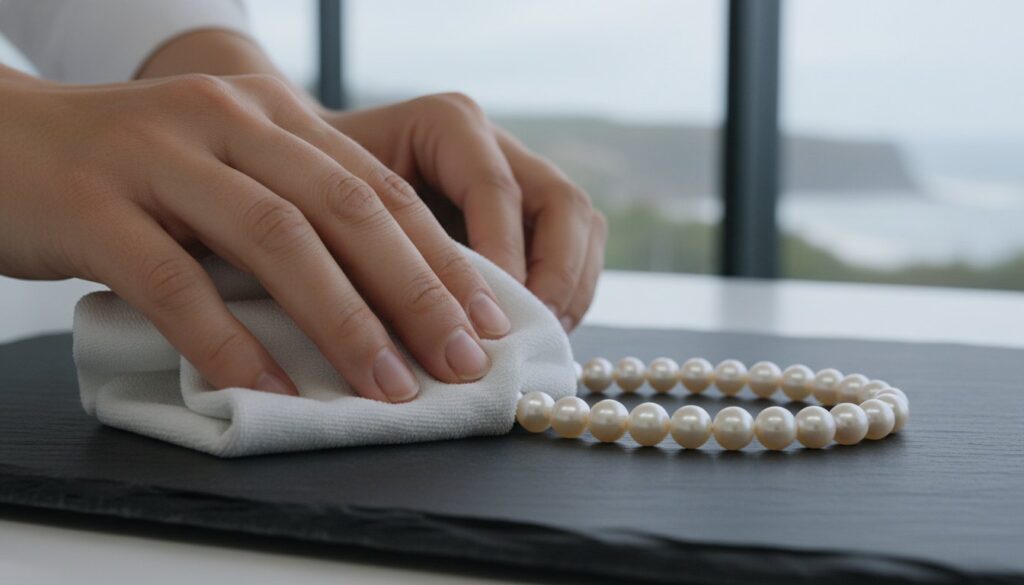
A string of pearls holds a certain gravity, a timeless link to the wild beauty of the Australian coast. Yet, preserving their natural, moon-like lustre can feel like navigating a treacherous path. Conflicting advice abounds-harsh chemicals, abrasive home remedies-each a potential misstep that could permanently mar their delicate surface. The fear of turning a cherished heirloom into a dull, yellowed relic is real, leaving many to simply store their treasures away, untouched and unenjoyed.
Restoration is a delicate process. While severe yellowing caused by age or improper storage is often irreversible, a professional cleaning by a trusted jeweller may slightly improve their appearance. An experienced business like Dover Jewelry and Pawn Exchange can assess vintage pieces and offer professional advice. Your strongest strategy, however, is prevention. Storing pearls away from direct sunlight and ensuring they are the last thing you put on and the first you take off will preserve their original, luminous colour for years to come.
This guide cuts through the noise. We provide an uncompromising, expert-approved roadmap for how to clean pearl jewelry with the precision and care it deserves. Forget the guesswork. Here, you will find a methodical, step-by-step process engineered to protect their integrity, from the organic gem to the silk thread and metal clasp. It’s time to restore their brilliance with quiet confidence and ensure your treasured pieces endure for generations to come.
Key Takeaways
- Understand why pearls are delicate organic gems, requiring a specialised care philosophy to protect their fragile, layered nacre from damage.
- Master our expert-approved ritual for how to clean pearl jewelry, using only gentle, skin-safe materials to safely restore their signature lustre.
- Discover advanced techniques tailored to specific pieces, from properly drying the silk on a pearl strand to cleaning around intricate settings.
- Learn the essential rules for long-term storage and daily wear that preserve your pearls for a lifetime, preventing damage before it ever begins.
Understanding Your Pearls: Why They Require Special Care
Unlike diamonds hewn from the earth’s crust or gold forged in ancient stars, a pearl is an organic treasure. It is not mined; it is grown. Born from a living organism, its very composition demands a different level of respect and a gentler hand. While a diamond is hard and resilient, a pearl is soft, porous, and fundamentally vulnerable. This unique origin story is why your pearl jewellery requires special care, a thoughtful approach that honours its delicate nature.
The Science Behind a Pearl’s Delicate Lustre
A pearl’s iconic glow-its lustre-is not a simple surface shine. It is an optical phenomenon, engineered by nature. Thousands of microscopic layers of a crystalline substance called nacre are meticulously deposited, one over the other. Light penetrates these translucent layers and reflects back, creating a deep, iridescent radiance that is impossible to replicate. But this porous structure is also its weakness. The very layers that create its beauty can absorb skin oils, cosmetics, and chemicals, clouding the surface and permanently dulling its inner light. Understanding how to clean pearl jewelry correctly begins with this knowledge. Think of it as caring for fine silk, not scrubbing a tile.
Common Cleaning Mistakes That Cause Irreversible Damage
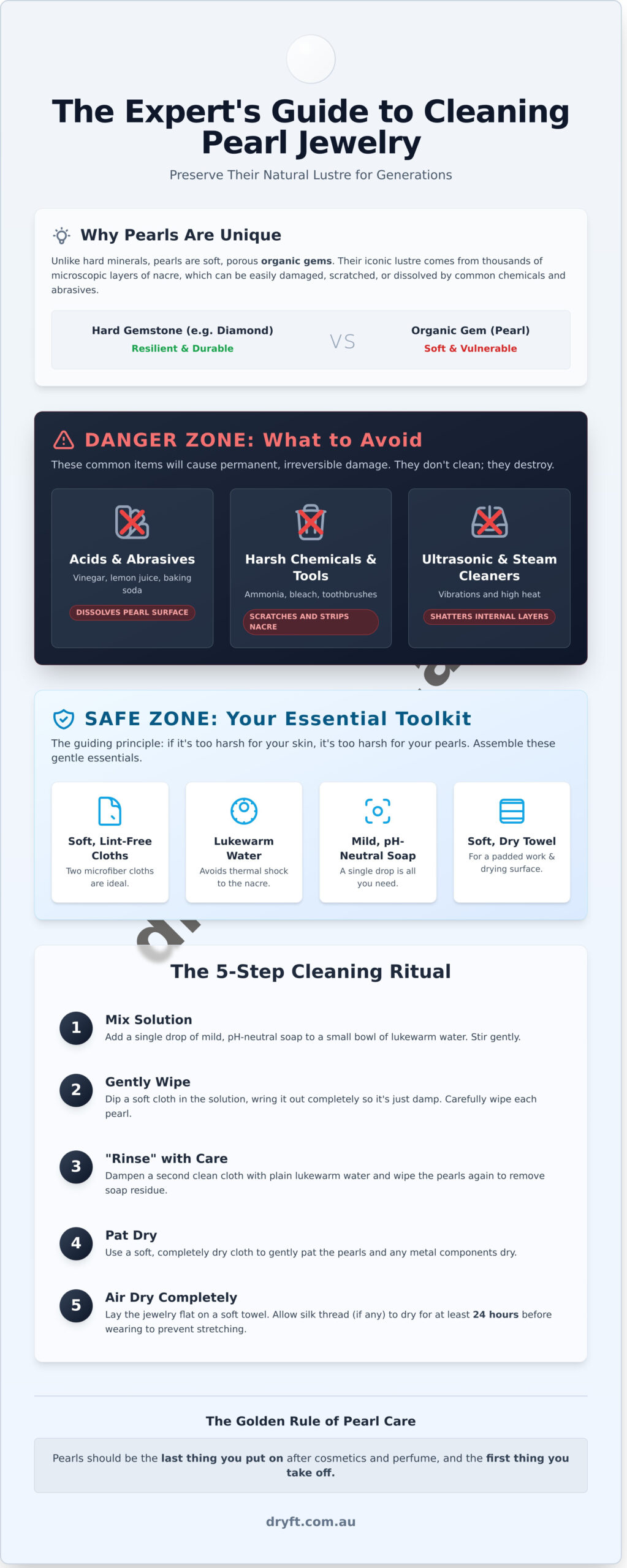
The greatest threats to your pearls often hide in plain sight, disguised as common household cleaners. Before you reach for a quick fix, understand that the following methods will cause permanent, irreversible damage. They don’t clean; they destroy.
- Acids and Abrasives: Everyday items like vinegar, lemon juice, and baking soda are catastrophic for pearls. Composed of calcium carbonate, a pearl’s surface will literally dissolve when exposed to acid. Abrasives will scratch and strip away the delicate nacre.
- Harsh Chemicals and Tools: Never use ammonia-based cleaners, bleach, or aggressive detergents. Likewise, a toothbrush or a coarse cloth will inflict a web of fine scratches, forever diminishing the pearl’s lustre.
- Ultrasonic Cleaners: While effective for hard gemstones and metals, the intense vibrations from an ultrasonic cleaner can shatter a pearl’s nacre layers, loosen it from its setting, and cause profound internal damage. Avoid them entirely.
The Essential Pearl Cleaning Toolkit: Your Safe Materials
Pearls are a gift from the ocean, organic gems that demand a gentle, considered approach. The guiding principle for their care is simple yet uncompromising: if a substance is too harsh for your skin, it is certainly too harsh for your pearls. Preparing to clean them isn’t about acquiring complex equipment; it’s about assembling a few simple, high-quality essentials you likely already have. This is the foundation of how to clean pearl jewelry correctly-with profound respect for its natural, delicate origins.
Your Safe Cleaning Arsenal
True craftsmanship relies on the right tools. For your pearls, this means a curated selection of soft, non-abrasive materials. Forget harsh chemicals; your arsenal is one of pure, gentle effectiveness. Assembling these items is the first step toward restoring their natural lustre with quiet confidence.
- Two soft, lint-free cloths: Microfiber cloths, like those used for premium sunglasses or camera lenses, are ideal. Designate one for gentle washing and the other for drying and polishing.
- A small bowl of lukewarm water: Temperature is critical. Never use hot or cold water, as the thermal shock can cause the delicate nacre to crack over time.
- A very mild, pH-neutral soap: A single drop of baby soap or a professionally formulated jewelry cleaner made specifically for pearls is all you need. The goal is to lift away skin oils and residue, not strip the pearl’s surface. For expert-approved methods, the GIA’s official pearl cleaning guide provides an excellent, trustworthy reference.
- A soft, dry towel: This will serve as a protected, padded surface for your jewelry to rest on before and after the cleaning process.
The ‘Never Use’ List: A Final Warning
Just as a seasoned explorer knows which paths to avoid, a knowledgeable pearl owner must recognise the dangers. Certain common household cleaners can inflict irreversible damage, stripping the lustre and compromising the integrity of your cherished pieces. This is not a list of suggestions; it is a set of hard boundaries to protect your investment.
Steer clear of ammonia, vinegar, chlorine bleach, and aggressive commercial jewelry dips designed for hard gemstones. Abrasive powders and creams will scratch the delicate nacre beyond repair. Furthermore, avoid ultrasonic cleaners and steam cleaners at all costs. The intense heat and vibrations can damage the pearl’s surface and, crucially, weaken and stretch the silk thread on which they are often strung, risking a catastrophic failure.
A Step-by-Step Guide to Cleaning Pearl Jewelry
Understanding how to clean pearl jewelry is less about harsh chemicals and more about a gentle, deliberate ritual. This process is designed to be a quiet moment of care, preserving the natural lustre of your treasured pieces without risk. It’s a foolproof method, engineered for peace of mind and built to protect the organic beauty of your pearls. Follow these steps after every few wears to maintain their radiant glow.
Step 1: Prepare Your Gentle Cleaning Solution
Begin by preparing a sanctuary for your pearls. Fill a small bowl with lukewarm water-never hot or cold, as extreme temperatures can damage their delicate nacre. Introduce a single, tiny drop of a pH-neutral, mild soap, such as a gentle dishwashing liquid. Stir it gently. You are not looking for a bowl of suds; the goal is a solution with a subtle sheen on the surface, just enough to dissolve skin oils and grime without being abrasive.
Step 2: Wipe Each Pearl Individually
This step requires a focused touch. Dip a soft, lint-free cloth (a microfibre or chamois cloth is ideal) into your prepared solution and wring it out until it is merely damp, not dripping. Gently wipe each pearl, one by one, moving along the strand with care. This individual attention removes residue without compromising the integrity of the piece. It is critical to never submerge a pearl strand in water. As detailed in Mikimoto’s guide to pearl care, prolonged moisture can penetrate the drill holes and weaken the silk thread, leading to stretching or breakage over time.
Step 3: Rinse and Dry with Care
To finish, take a second clean cloth and dampen it with fresh, lukewarm water. With the same gentle motion, wipe each pearl again to remove any faint soap residue, ensuring nothing is left behind. Lay your jewelry flat on a soft, absorbent towel. Gently pat away any excess moisture. Now, allow it to air dry completely before returning it to its storage case. This final step is essential; storing pearls while even slightly damp can stretch the cord and invite damage. Patience is paramount.
Advanced Care: Techniques for Different Jewelry Types
True mastery in caring for your pearls lies in understanding their unique construction. A simple wipe-down is the foundation, but the nuances of how to clean pearl jewelry shift depending on whether you’re handling a delicate strand or a robust metal ring. This is where precision matters, protecting not just the pearl, but the entire piece’s integrity.
How to Clean a Pearl Necklace (Without Damaging the Silk)
The traditional silk thread that gives a pearl strand its beautiful drape is also its point of vulnerability. Submersion is the enemy. Soaking a necklace in water will not only stretch and weaken the silk over time but also cause it to attract and hold onto dirt, which can be abrasive. Instead, follow this uncompromising method:
- Gently wipe each pearl with a soft, lint-free cloth dampened with purified water.
- Pay special attention to the areas around the knots, where oils and grime can accumulate.
- Once clean, lay the strand completely flat on a soft, dry towel. Allow it to air dry for at least 24 hours before wearing to ensure the silk has fully contracted and dried.
Safely Cleaning Pearl Earrings and Studs
For earrings, the challenge is cleaning the metal posts and backings without exposing the pearl to harsh chemicals. This is a task of two parts. First, address the metal. Dip a cotton swab in a mild, ammonia-free cleaning solution and meticulously clean the post, bezel, and backing. Be precise, keeping the solution away from the pearl itself. Afterwards, use a separate, clean, damp cloth to gently wipe the surface of the pearl, restoring its lustre.
Caring for Pearl Rings and Metal Settings
A pearl ring is constantly exposed, and its metal setting can become a trap for lotions, soap, and daily grime. To dislodge this buildup without risk, use an ultra-soft brush-a baby toothbrush is ideal. Dip it in a little warm, slightly soapy water and gently scrub only the metalwork. Keep the bristles away from the pearl’s surface at all times, as even a soft brush can micro-scratch its delicate nacre. Rinse the metal quickly under a gentle stream of lukewarm water, avoiding the pearl, and pat dry immediately with a soft cloth.
Beyond Cleaning: Long-Term Preservation and Storage
True preservation extends beyond the immediate act of cleaning. It’s a philosophy of care, a deep-seated respect for natural artistry that ensures longevity. Knowing how to clean pearl jewelry is the foundational skill, but mastering its daily handling and long-term storage is what transforms ownership into true stewardship. This is about creating a system where your pearls are protected by habit, not just by periodic maintenance.
The ‘Last On, First Off’ Golden Rule
This is the single most impactful habit you can adopt for the health of your pearls. It’s a simple, non-negotiable rhythm: your pearls should be the final touch, put on only after cosmetics, perfumes, and hairsprays have fully settled. Conversely, they should be the very first thing you remove at the end of the day. This discipline shields their delicate nacre from the slow, corrosive effect of chemicals, preserving their deep lustre for a lifetime.
The Art of Proper Storage
When not adorning you, your pearls require a sanctuary. A place of rest that protects their integrity. Storing them correctly is just as crucial as how you wear and clean them. For uncompromising protection:
- Isolate Them: Always store pearls separately from other jewelry. A soft, fabric-lined pouch or a dedicated compartment in a jewelry box prevents harder gemstones and metals from scratching their surface.
- Let Them Breathe: Pearls contain trace amounts of water and can dehydrate in an arid environment. Never store them in an airtight plastic bag; this can cause the nacre to crack. A silk or velvet pouch is ideal.
- Lay Them Flat: Hanging pearl necklaces, especially long strands, can cause the silk thread to stretch and weaken over time. Store them flat to maintain the strand’s tension and integrity.
When to Seek Professional Help
There are moments when even the most diligent owner must defer to a master craftsman. For deeply soiled pieces, treasured vintage heirlooms, or strands that feel loose, professional servicing is essential. We recommend having frequently worn pearl necklaces professionally restrung every one to two years. While knowing how to clean pearl jewelry at home is vital, entrusting your pieces to an expert ensures their legacy. For uncompromising care and meticulous attention to detail, explore Dryft’s jewelry repair services. We bring a philosophy of outback-proven durability and refined craftsmanship to every piece we handle.
Your Legacy of Lustre: Preserving Your Pearls
Mastering the art of pearl care is a quiet commitment to preserving a piece of the wild, refined. As you’ve learned, these organic gems demand a gentle touch-a soft cloth after each wear is your most powerful tool, and the ‘last on, first off’ principle is the unbreakable rule that shields them from the harshness of modern life. With this knowledge, the question of how to clean pearl jewelry is no longer a challenge, but a confident ritual that ensures your pieces endure, reflecting your story with every subtle gleam.
The reward for such dedicated care is a lifetime of brilliance, a reward amplified when your jewellery is crafted with integrity from the very start. At Dryft, our philosophy is forged in Australian authenticity. We believe in timeless designs meant to be cherished, which is why each piece is handcrafted with uncompromising precision, featuring ethically sourced freshwater pearls that carry their own unique history. They are more than adornments; they are a sanctuary of elegance for the modern adventurer. For those seeking the perfect balance of durability and elegance, our pearl string bracelet represents the pinnacle of engineering precision and organic beauty, designed to withstand the Australian landscape while maintaining its refined lustre.
Continue your journey into the world of enduring beauty. Discover our collection of handcrafted pearl jewelry and find the piece destined to become a part of your legacy.
Frequently Asked Questions About Pearl Care
How often should I clean my pearl jewellery?
For enduring lustre, a gentle wipe with a soft, dry cloth after every wear is essential. This removes skin oils and cosmetic residues that can degrade the pearl’s surface over time. For a more thorough clean, use a cloth lightly dampened with lukewarm water. The best method for how to clean pearl jewelry is this consistent, gentle maintenance, which honours the gem’s natural integrity far better than infrequent, aggressive treatments.
Can I use baking soda or vinegar to clean pearls?
An uncompromising no. Pearls are organic gems, exceptionally vulnerable to acids and abrasives. Vinegar’s acidity will dissolve their delicate nacre, while baking soda’s grit will permanently scratch their surface, destroying their luminous finish. True quality demands precise care. Rely only on purified water or a cleaner specifically engineered for pearls to protect your investment from irreparable damage.
What should I do if my pearls get wet in the rain?
Act with intention. Lay your pearl jewellery flat on a soft, absorbent towel immediately after exposure. Allow them to air dry completely before storing. This prevents the silk cord from stretching, weakening, or attracting dirt while damp. Never hang a wet pearl necklace to dry, as the weight of the pearls will strain and permanently stretch the silk thread, compromising its structural integrity.
Can yellowed pearls be restored to their original colour?
Restoration is a delicate process. While severe yellowing caused by age or improper storage is often irreversible, a professional cleaning by a trusted jeweller may slightly improve their appearance. Your strongest strategy is prevention. Storing pearls away from direct sunlight and ensuring they are the last thing you put on and the first you take off will preserve their original, luminous colour for years to come.
Is it safe to use a silver polishing cloth on the clasp of my pearl necklace?
Yes, but with absolute precision. The polishing compounds on the cloth are engineered for metal and are harmful to the organic surface of a pearl. Carefully isolate the metal clasp, ensuring the treated cloth makes no contact whatsoever with the nearby pearls. This meticulous approach protects the harmony of the entire piece, respecting both the lustrous gems and their finely crafted settings.
How do I know when my pearl necklace needs to be restrung?
Your pearls provide clear signals. Inspect the silk cord for fraying, discolouration, or excessive space between each pearl. If the knots feel loose or the strand hangs unevenly, its foundation is compromised. With regular wear, restringing every two to three years is a wise investment. In Australia, expect this expert service to cost between A$60 and A$180, depending on the necklace’s length and complexity.
Can I wear my pearl ring every day?
We strongly advise against it. Pearls are one of the softest gems, ranking just 2.5 on the Mohs hardness scale. Daily wear subjects them to a constant risk of scratches, chips, and damage from hand sanitisers, lotions, and everyday impacts. Reserve your pearl ring for occasions where its quiet luxury can be appreciated without exposure to the rugged demands of daily life. It is a treasure, not a tool for every task.