

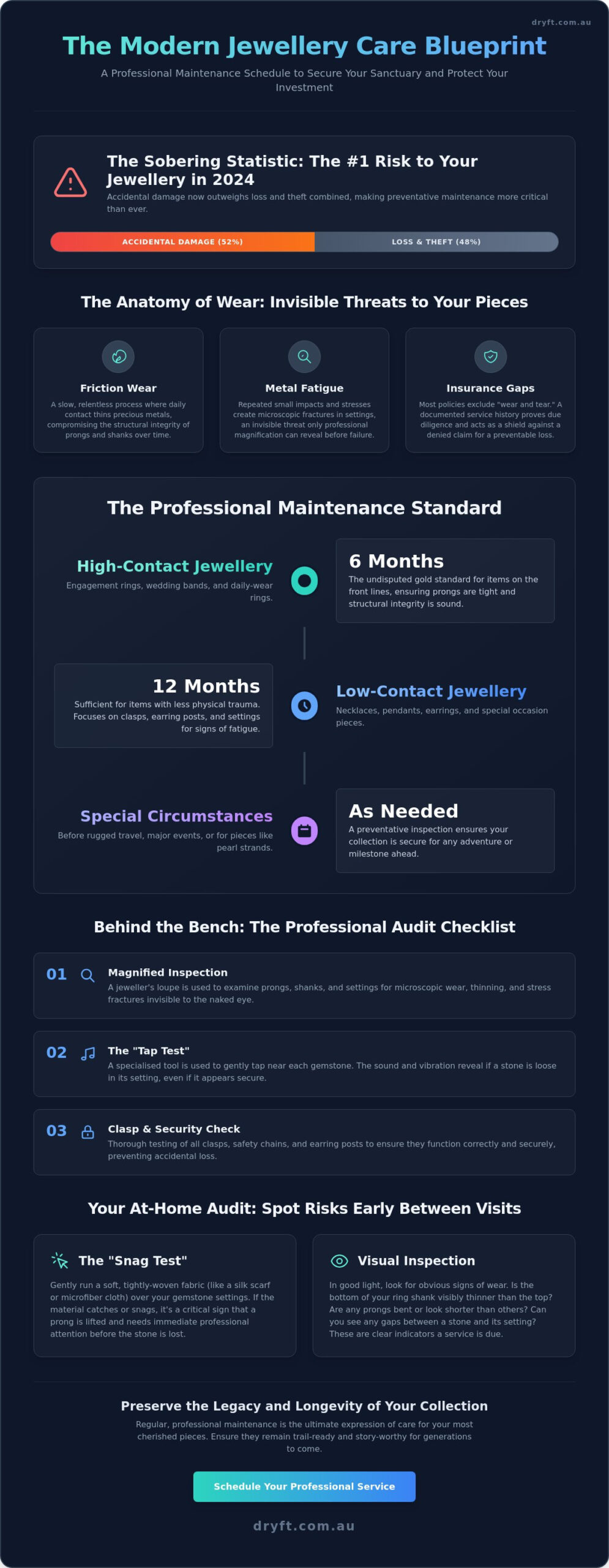
In 2024, accidental damage accounted for 52% of all jewelry insurance claims, a figure that now outweighs loss and theft combined. It’s a sobering reality for the modern adventurer who views their collection as a personal sanctuary. You understand that true luxury isn’t fragile, but even the most robust engineering requires a seasoned eye to remain trail-ready. You shouldn’t have to wonder if a loose prong or a worn silk thread is about to turn a cherished memory into a claim form.
Knowing exactly how often should you get jewelry checked is the difference between effortless confidence and avoidable heartbreak. We agree that your focus should be on the discovery ahead, not the structural integrity of your settings. This guide provides a definitive maintenance schedule to protect your investment, from the specific needs of your Pearl String Bracelet to the resilience of your diamond staples. You’ll gain a clear understanding of wear and tear, insurance requirements, and the precise rhythm of professional inspections needed to keep your sanctuary secure.
Key Takeaways
- Master the concept of “friction wear” to understand how daily movement thins precious metals and compromises your structural integrity over time.
- Establish a definitive schedule for how often should you get jewelry checked, distinguishing between high-impact daily rings and occasional-wear statement pieces.
- Uncover the technical engineering behind a professional audit, including the “Tap Test” used to identify loose stones invisible to the naked eye.
- Learn simple at-home diagnostic techniques, like the “Snag Test,” to identify immediate risks like lifted claws or thinning shanks before they lead to stone loss.
- Align your maintenance routine with professional standards to preserve the legacy and longevity of handcrafted pieces like the Pearl String Bracelet.
The Anatomy of Wear: Why Fine Jewellery Requires Regular Servicing
Fine jewellery isn’t a static object. It’s a living piece of engineering that accompanies you from the rugged coastline to the refined dinner table. While most people view a visit to the jeweller as a simple aesthetic refresh, a professional inspection is actually a structural integrity audit. It’s about ensuring the mechanical bond between precious metal and gemstone remains uncompromised. When considering how often should you get jewelry checked, it’s vital to recognize that your environment dictates the pace of wear. Your jewellery is a sanctuary of craftsmanship, but it’s one that exists in a world of physical consequences.
Every time you grip a steering wheel, adjust your gear, or even clap your hands, your rings experience friction. This “friction wear” is a slow, relentless process where gold or platinum literally thins against your skin or adjacent bands. It’s the intersection of grit and glamour. Handcrafted settings are built for durability, but they aren’t immune to the physics of daily life. Your jeweller acts as a technical guide, spotting the microscopic signs of depletion before a setting fails. Determining how often should you get jewelry checked depends heavily on this lifestyle reality. A piece worn during a weekend trek experiences vastly different stresses than one kept exclusively for evening galas.
Metal Fatigue and the Invisible Risks of Daily Wear
Small, repetitive impacts might seem insignificant, but they accumulate. These stresses create microscopic fractures in ring shanks that the naked eye cannot detect. Over time, prongs (or claws) thin out as they rub against fabrics and hard surfaces, losing their grip on your centre stone. Metal fatigue is the structural weakening of jewellery through repeated stress over time. It’s an invisible threat that only professional magnification can reveal. Without these checks, the very metal designed to protect your stones can become the point of failure.
Why Insurance Won’t Save a Neglected Piece
Relying solely on insurance is a high-stakes gamble. Most Australian jewellery insurance policies contain a specific “wear and tear” exclusion. If a diamond falls out because a prong was allowed to wear down to a paper-thin sliver, the insurer may deny the claim based on a lack of maintenance. Maintaining a documented service history transforms your maintenance into a shield. It validates the provenance and condition of your collection. While common Jewellery cleaning methods at home keep things bright, they don’t fulfill the “reasonable care” clauses found in many premium policies. Documented inspections prove you’ve exercised due diligence. This record is essential for bespoke engagement rings that represent both high emotional and financial value.
The Professional Standard: How Often Should You Get Your Jewellery Checked?
Reliability is the hallmark of high-end engineering. Just as you wouldn’t embark on a remote expedition without a thorough vehicle service, your fine jewellery requires a disciplined maintenance schedule to ensure it survives the rigours of an active life. Determining how often should you get jewelry checked depends largely on the piece’s proximity to impact. Items that live on your hands face a different reality than those that rest against your neckline. A structured approach to servicing doesn’t just prevent loss; it preserves the quiet confidence that comes from wearing a secure sanctuary of gold and stone.
For high-contact items like rings, the 6-month rule is the undisputed gold standard. These pieces are on the front lines, constantly encountering hard surfaces, temperature shifts, and the occasional unintentional knock. Conversely, necklaces and earrings typically sustain less physical trauma. An annual audit is generally sufficient for these items, allowing a professional to inspect clasps and earring posts for signs of metal fatigue. Before any major milestone or rugged travel, book a preventative inspection. It’s the best way to ensure your collection is ready for the journey ahead. Incorporating expert jewelry care tips into your routine provides a solid foundation, but it cannot replace the technical precision of a professional assessment.
The 6-Month Inspection for Engagement and Wedding Rings
Rings endure more impact than any other category of jewellery. Over half a year, the prongs that secure your stones can shift or thin due to constant contact with the world around you. This bi-annual cycle allows a jeweller to perform a “prong-check,” ensuring no stone has developed even a microscopic wobble. We recommend aligning these checks with the change of seasons. Your finger size fluctuates between the heat of summer and the chill of winter. A pre-summer and pre-winter check ensures your fit remains perfect, preventing the risk of a ring sliding off a cold hand or becoming uncomfortably tight in the heat.
Pearl Maintenance: When to Restring Your Handcrafted Pieces
Pearls demand a specialized technical approach. Unlike diamond settings, a pearl string bracelet or necklace relies on the integrity of silk thread. Over time, this silk stretches and absorbs oils from your skin, which can weaken the strand. You’ll notice small gaps appearing between the pearls or the knots looking frayed. Professional restringing should occur every 12 to 24 months, depending on how often you wear the piece. This process ensures each pearl remains individually knotted and secure. If you haven’t looked closely at your strands lately, it might be time to consult with a master jeweller about the current state of your thread.
Behind the Bench: What Happens During a Professional Maintenance Assessment?
A professional inspection is far more than a superficial wipe-down. It is a technical deep dive into the structural health of your collection. When you consider how often should you get jewelry checked, it helps to understand the diagnostic rigour involved. Once your piece is on the bench, it undergoes a multi-stage appraisal designed to identify vulnerabilities before they manifest as a lost stone or a snapped chain. This process bridges the gap between the grit of your daily adventures and the enduring glamour of fine craftsmanship. It is an essential ritual for anyone who treats their jewellery as a high-performance sanctuary.
The assessment begins with a macro-inspection. A master jeweller uses a 10x magnification loupe or a high-powered microscope to scan the metal surface for microscopic stress fractures. These tiny fissures are the early warning signs of metal fatigue. Following this, the jeweller performs the “Tap Test.” By gently tapping the stone with a specialized tool, they can hear or feel vibrations that indicate a loose setting. This technique identifies stones that aren’t yet visibly moving but are at high risk of falling out. To ensure your investment remains secure, major publications recommend having your pieces professionally cleaned and checked at regular intervals. This level of scrutiny is what maintains the engineering excellence of your handcrafted items.
Stone Security and Claw Retipping
Every individual claw is checked for alignment, height, and thickness. Over years of wear, these prongs can flatten or “mushroom,” losing their structural grip. If the metal has worn too thin, the jeweller may recommend retipping. This is a surgical addition of fresh metal to the top of the prong to reinforce the setting. While the primary solitaire often gets the most attention, a professional audit meticulously examines every side stone. Even the smallest accent diamond deserves the same technical security as the centrepiece.
Ultrasonic and Steam Cleaning: More Than Just Aesthetics
Professional cleaning is the foundation of any comprehensive jewelry care guide. An ultrasonic cleaner uses high-frequency sound waves to create cavitation bubbles, which blast away compacted debris from areas your toothbrush can’t reach. This isn’t just about shine; trapped grit can act as an abrasive, slowly grinding away the metal from the inside out. However, technical expertise is required to know which gems can handle the pressure. While diamonds thrive in this environment, organic gems like those in the Baroque Pearl Drop Earrings must never enter an ultrasonic cleaner, as the vibration can damage their delicate nacre. A final high-pressure steam blast removes any remaining residue, leaving the piece structurally sound and visually pristine.
The At-Home Audit: Signs Your Jewellery Needs Immediate Attention
Between your scheduled professional servicing, you are the primary steward of your collection. Maintaining a sanctuary of fine jewellery requires a keen eye for the subtle shifts that signal mechanical fatigue. While we have already established how often should you get jewelry checked by an expert, your own weekly vigilance provides the necessary oversight between those bi-annual visits. Detecting a vulnerability early is the difference between a simple repair and the devastating loss of a centre stone. It is a pragmatic habit for the modern explorer who demands reliability from every piece they own.
The “Snag Test” is your most effective at-home diagnostic tool. Gently run a fine silk cloth over your stone settings. If the fabric catches or snags on a claw, it indicates that a prong has lifted or sharpened, creating a gap where a diamond could escape. Visual cues are equally telling. Inspect your ring shanks for thinning metal where the band meets the palm; this is the area most susceptible to friction wear. Similarly, look for distorted earring posts or clasps that feel “soft” rather than providing a crisp, audible snap. If you notice any of these signs, contact our master jewellers immediately for a structural restoration.
How to Perform the 30-Second Weekly Inspection
Consistency is the foundation of high-end maintenance. Start by holding the piece close to your ear and gently tapping the metal with your fingernail. If you hear a faint “click” or rattle, a stone has likely come loose in its seat. Next, engage the clasp mechanism several times to ensure there is resistance and proper alignment. Finally, look behind the stones for a build-up of residue. While we know how often should you get jewelry checked for structural issues, a dull appearance often means compacted grit is beginning to act as an abrasive against the setting’s internal walls.
Red Flags for Handcrafted Pearl Jewellery
Pearls require a different set of observations due to their organic nature and silk-based construction. Gapping between the pearls is a primary red flag; it suggests the silk thread has stretched and lost its tension, leaving the strand vulnerable to snapping. You should also check for discolouration of the thread near the clasp, which often indicates that oils and moisture have begun to compromise the silk’s integrity. A broken thread on a baroque pearl drop earring is a critical failure that requires immediate professional intervention to prevent the loss of the pearl. Never attempt to “superglue” or DIY a repair on these delicate handcrafted pieces.
Preserving the Legacy: Professional Repairs and Maintenance at Dryft
True luxury is an investment in longevity. At Dryft, we don’t just engineer a piece for the moment of discovery; we partner with you to ensure its survival across a lifetime of movement. We serve as the dedicated stewards for both the creation and the preservation of bespoke engagement rings and handcrafted pearl collections. Our commitment to ethical maintenance means every repair utilizes high-quality materials that match the original integrity of your piece. By adopting a proactive mindset, you ensure your jewellery remains a secure sanctuary, no matter how demanding your environment becomes.
The transition from a rugged trail to a premium interior shouldn’t be marred by the worry of a failing setting. We understand the specific mechanical requirements of your pieces because we understand the life you lead. When you consider how often should you get jewelry checked, remember that consistent professional oversight is the only way to validate the condition of your wearable legacy. Our artisans treat every maintenance consultation with the same technical precision used during the initial forging process. It’s a small, necessary ritual to maintain the quiet confidence of a well-crafted collection.
Bespoke Care for Unique Commissions
Custom-designed pieces require a jeweller who understands the specific engineering and load-bearing points of the original design. Our expertise extends beyond traditional gold work to the delicate handling of ethically sourced diamonds and freshwater pearls. Whether it’s the specific tension required for a strand or the alignment of a unique claw, our team provides the specialized care your commissions deserve. Trust your most cherished pieces to the artisans who understand the exact intersection of grit and glamour. We ensure that every repair respects the provenance and soul of the handcrafted item.
Booking Your Next Maintenance Appointment
Securing the future of your collection is a straightforward process. To book a professional assessment, simply reach out to our team via our digital portal or visit us in person. We’ll conduct a thorough audit of your pieces, providing a clear roadmap for any necessary reinforcements. Regular maintenance is a modest investment compared to the emotional and financial cost of replacing a lost centre stone or a family heirloom. Ensure your jewellery is ready for the next adventure. Contact Dryft for a professional check-up and confirm exactly how often should you get jewelry checked based on your specific lifestyle.
Engineer Your Collection for the Long Haul
Your jewellery is a sanctuary of handcrafted luxury, built to withstand the rigours of an active life. By mastering the 6-month inspection rhythm and performing regular at-home audits, you ensure your most precious pieces remain trail-ready. We’ve explored how professional audits identify invisible metal fatigue and why a documented service history is vital for insurance compliance. Ultimately, knowing exactly how often should you get jewelry checked transforms your collection from a point of worry into a source of quiet confidence.
As an Australian-owned independent boutique, we specialize in the meticulous care of ethically sourced diamonds and pearls. Our artisans bring high-end engineering to every handcrafted repair, ensuring your legacy is preserved with technical precision. Don’t wait for a snag or a loose stone to signal a mechanical failure. Book your professional jewellery maintenance at Dryft today to secure your investment. Your next adventure is waiting, and your jewellery should be ready to meet it with uncompromising strength and brilliance.
Frequently Asked Questions
How much does a professional jewellery check cost in Australia?
Professional inspection costs in Australia vary depending on the complexity of the piece and the depth of the audit. While some independent boutiques offer a basic visual check as a complimentary service, a comprehensive structural assessment and professional clean often involves a standard service fee. If maintenance like rhodium plating or prong retipping is required, these costs are typically quoted based on the current market rates for precious metals and the labour involved.
Can I get my jewellery checked at any store, or should I return to the original jeweller?
Returning to the original artisan is the preferred choice because they possess the specific engineering blueprints and knowledge of the metal alloys used in your piece. However, any qualified master jeweller is capable of performing a thorough structural audit. If you are travelling or have relocated, seek an expert who understands the nuances of rugged luxury and high-end craftsmanship to ensure your sanctuary remains secure.
Does wearing my jewellery in the shower affect how often it needs to be checked?
Frequent exposure to water and personal care products significantly impacts how often should you get jewelry checked. Soap scum and mineral deposits accumulate behind stone settings, creating a layer of grit that acts as a microscopic abrasive against the metal. This buildup can also dampen the sound of a loose stone during an auditory check. If you wear your pieces in the shower daily, a more frequent professional cleaning schedule is highly recommended.
What happens if a jeweller finds a loose stone during an inspection?
If a stone is found to be loose, the jeweller will recommend immediate tightening or claw retipping. They use specialized bench tools to gently move the metal prongs back into a secure position. In cases where the metal has thinned significantly due to years of friction wear, the artisan may suggest adding fresh gold or platinum to reinforce the setting. This technical intervention ensures the stone survives your next adventure without the risk of loss.
How long does a professional jewellery maintenance appointment typically take?
A standard professional maintenance appointment for a structural assessment usually takes between 15 and 30 minutes. This window allows the jeweller to perform the macro-inspection and the “Tap Test” mentioned earlier in this guide. If your pieces require intensive ultrasonic cleaning or restorative repairs, you might be asked to leave them in the workshop for a few days to ensure the work is completed to an elite standard of precision.
Will professional cleaning and checking thin out my gold ring over time?
Professional inspections and ultrasonic cleaning do not thin out your gold or compromise its weight. However, aggressive mechanical polishing removes a microscopic layer of metal to erase surface scratches and restore a mirror finish. To preserve the long-term structural integrity of your ring shank, we suggest limiting full refinishing to once a year. Focus your more frequent visits on structural checks and gentle steam cleaning to maintain strength.
Is it safe to get antique or heirloom jewellery checked as often as modern pieces?
Antique and heirloom pieces actually require more frequent monitoring than modern commissions. Older solder joins and aged metal alloys can become brittle over time, making them more susceptible to metal fatigue and sudden failure. We recommend a professional assessment every six months for heirlooms worn regularly. This proactive approach ensures the history and legacy of the piece are protected by modern engineering standards while respecting its original craftsmanship.
Can I check my own jewellery prongs at home with a magnifying glass?
You can perform a preliminary check at home using a 10x magnifying loupe to identify obvious snags or thinning metal. While this is a great habit for the modern explorer, it shouldn’t replace a professional bench assessment. Determining how often should you get jewelry checked involves more than a visual scan. It requires the trained eye of an artisan who can detect subtle vibrations and structural weaknesses that are invisible to the untrained observer.