
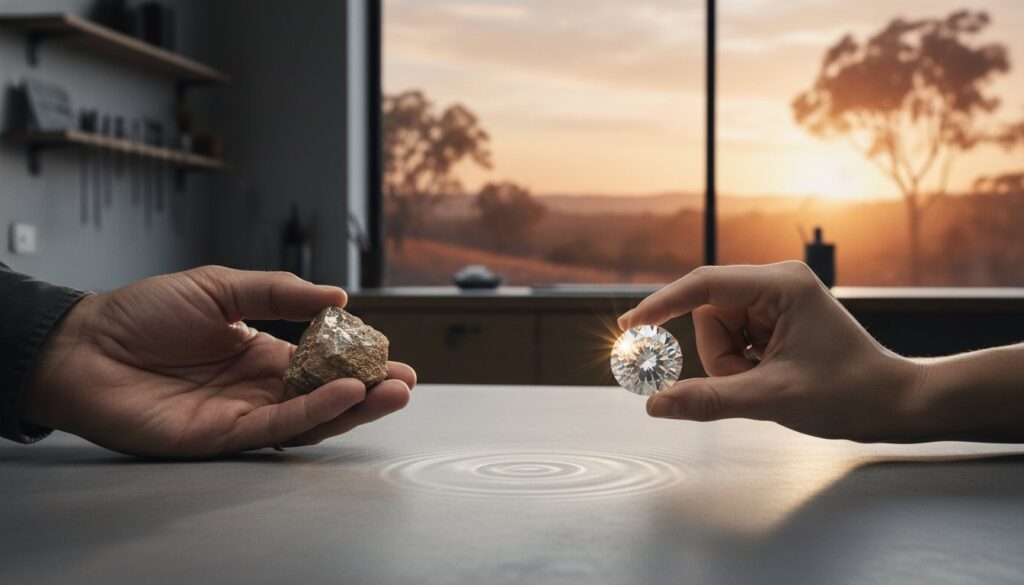
While 99.8% of the global diamond supply is officially certified conflict-free as of May 2026, the weight of a stone’s history still carries more gravity than its carats. You seek a piece that mirrors your own standards of grit and refinement. Having conflict-free diamonds explained in the context of today’s rigorous landscape is the first step toward a purchase that feels as good as it looks. You deserve the confidence that comes from high-end engineering and ethical sourcing; you don’t need the nagging skepticism of corporate greenwashing.
We understand that true luxury is a sanctuary built on trust. This guide reveals the reality of modern diamond sourcing. It moves beyond the basic Kimberley Process, currently chaired by India, to explore the 2026 EU regulations on Russian origin and the benchmark standards of the Responsible Jewellery Council. You’ll learn to identify the markers of a truly ethical journey, from the rugged mine to the polished finish. We’ll provide a clear framework for selecting jewelry that aligns with a lifestyle of intentionality. This ensures every piece in your collection, from a verified stone to our Baroque Pearl Drop Earrings or Pearl String Bracelet, reflects a commitment to uncompromising integrity.
Key Takeaways
- Master the distinction between basic legal compliance and the higher standards of ethical luxury required for the modern adventurer.
- Navigate the Kimberley Process with precision by understanding how government-validated certificates secure the global supply chain from mine to port.
- Get conflict-free diamonds explained through the lens of emerging alternatives, including lab-grown and recycled stones that offer a guarantee by design.
- Build a reliable framework for verification by demanding origin-specific grading reports and auditing a jeweler’s “Chain of Custody” protocols.
- Discover how a philosophy of rugged sourcing and refined craftsmanship creates a sanctuary for those who value both high-end engineering and environmental integrity.
What is a Conflict-Free Diamond? Defining the Baseline
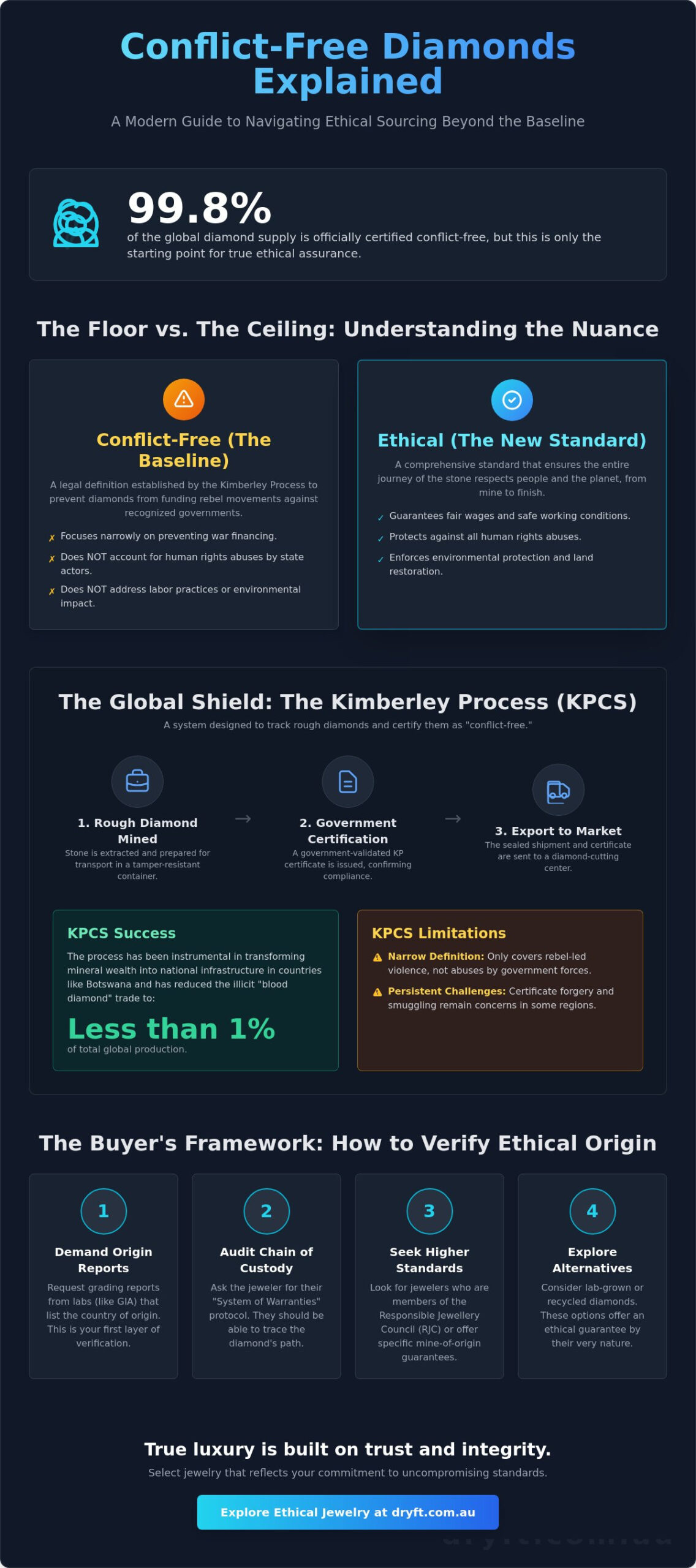
The diamond industry faced a brutal reckoning in the late 1990s. Civil wars in regions like Sierra Leone and Angola exposed a dark reality; diamonds were being used to finance rebel movements against recognized governments. This era of “blood diamonds” forced a global shift in how we perceive luxury. It led to the creation of the Kimberley Process Certification Scheme in 2003. This was a necessary defensive line. Legally, the term “conflict-free” applies only to stones that do not fund these specific insurgencies. While 99.8% of the world’s supply now meets this criteria, savvy explorers recognize that “conflict-free” is merely the baseline. It is the floor of the industry, not the ceiling of excellence.
A diamond represents more than light refraction. It’s a symbol of commitment and enduring strength. When you choose a stone, you’re selecting a piece of the earth to represent your own integrity. If that stone’s history is clouded by exploitation, the sanctuary you’ve built feels less secure. Having conflict-free diamonds explained clarifies that while the legal definition stops at war, your personal standards likely go much further. You want a stone that reflects the same quiet confidence and high-end engineering you demand from your most reliable gear.
The Rise of Conscious Consumerism in Australia
Modern Australians are no longer satisfied with a beautiful aesthetic alone. They want the technical assurance of a well-engineered piece and the peace of mind that comes with it. There’s been a clear shift away from mass-produced costume jewelry toward ethical jewelry australia. Transparency is the new hallmark of luxury. It’s the difference between a generic purchase and an intentional investment in a legacy of discovery. This movement is driven by a deep respect for the wild and a refusal to sacrifice ethics for performance.
Conflict vs. Ethical: Understanding the Nuance
The distinction between “conflict-free” and “ethical” is vital for the sophisticated buyer. A diamond can be legally conflict-free because it didn’t fund a rebel army, yet it might still originate from a mine with poor labor practices or low environmental standards. One focuses on preventing war; the other focuses on supporting fair wages, human rights, and land restoration. True luxury demands both. While legal compliance keeps you out of the storm, moral excellence ensures the entire journey is worth taking.
The Kimberley Process: A Shield Against the Rugged Reality
The Kimberley Process Certification Scheme (KPCS) serves as the mechanical foundation of the modern diamond trade. It is a rigorous system designed to track rough diamonds from the moment they leave the mine until they reach the port of export. Every shipment must be accompanied by a government-validated certificate; a literal passport that guarantees the stone didn’t fund rebel insurgencies. This legislative muscle is reinforced by the U.S. Clean Diamond Trade Act, which provides the technical framework for ensuring these standards are met before diamonds enter the world’s largest retail market.
Once a diamond is cut and polished, the trail doesn’t go cold. The “System of Warranties” takes over. This requirement mandates that every invoice in the supply chain must include a statement of origin. It is a pragmatic approach to reliability. In regions like Botswana and Namibia, the KPCS has been instrumental in transforming mineral wealth into national infrastructure, education, and healthcare. Having conflict-free diamonds explained requires acknowledging these successes; the process has successfully reduced the trade of illicit stones to less than 1% of total global production since its inception.
The Limitations of the Kimberley Process
Even the most robust engineering has its limits. The KPCS operates under a narrow definition of conflict. It specifically targets violence by rebel groups against recognized governments. This leaves a technical loophole; it doesn’t account for human rights abuses committed by state actors or government-run forces. In remote, rugged environments, certificate forgery and smuggling remain persistent challenges that demand constant vigilance. Critics from global NGOs argue the system is an aging piece of machinery that needs a complete overhaul to address the complex ethical realities of 2026.
The Responsible Jewellery Council (RJC) Standard
For the sophisticated trailblazer, the RJC standard represents the next level of assurance. While the KPCS focuses on the rough stone’s origin, the RJC Code of Practices covers the entire lifecycle of the jewelry. It includes stringent environmental protections, fair labor practices, and social governance. Third-party auditing ensures that these aren’t just corporate claims but verified realities. When you choose an RJC-certified jeweler, you’re opting for a higher standard of craftsmanship and care. This commitment to detail is why we prioritize materials that reflect a deep respect for the wild in every Dryft jewelry selection.
Beyond the Mine: The Evolution of Ethical Sourcing
The path to ethical luxury is no longer a single trail. While the Kimberley Process provides a necessary guardrail, the modern adventurer demands a more sophisticated map. Having conflict-free diamonds explained through the lens of 2026 requires looking at how technology and community-focused mining are redefining the industry. It’s about moving from a system of avoidance to one of active contribution. This evolution ensures that the jewelry you wear reflects a deep respect for the wild and the people who inhabit it.
Blockchain technology has become the new standard for technical precision in the supply chain. It creates an immutable digital record of a stone’s journey. From the rugged extraction site to the refined showroom, every hand that touches the diamond is logged in a decentralized ledger. This isn’t just about security; it’s about providing a gateway for life-changing experiences without the shadow of doubt. Similarly, the industry is shifting its focus toward Artisanal and Small-Scale Mining (ASM). Rather than boycotting these regions, ethical leaders are investing in them. This support helps formalize local economies, ensuring that the natural diamond industry continues to fund education and infrastructure in developing nations.
Laboratory-Grown vs. Earth-Mined Diamonds
Laboratory-grown diamonds offer a conflict-free guarantee by design. These stones are engineered through High Pressure High Temperature (HPHT) or Chemical Vapor Deposition (CVD) methods, resulting in a chemical and physical identity identical to mined stones. However, a sophisticated buyer looks beyond the surface. While lab diamonds avoid land displacement, they are often produced in energy-intensive facilities. You must weigh the land impact of a mine against the carbon footprint of a laboratory’s power grid. It’s about choosing the path that aligns with your personal philosophy of movement and freedom.
The Case for Recycled and Heirloom Stones
Recycled diamonds are the ultimate sustainable choice for those who value reliability and toughness. Giving new life to an existing stone is a ruggedly sustainable act that bypasses the need for new mining entirely. These gems carry a sense of history and quiet confidence that mass-produced alternatives can’t replicate. To maintain this legacy, professional jewelry repair and resizing is essential. Preserving the structural integrity of an heirloom stone ensures it remains a durable partner in your next adventure. Whether it’s a family diamond or a repurposed gem, these stones protect the future by honoring the past.
The Buyer’s Framework: How to Verify Ethical Origin
Having conflict-free diamonds explained gives you the map, but verification is how you navigate the terrain. True luxury is never guarded; it is transparent. When you’re ready to invest in a stone that matches your standards of integrity, you must look for technical evidence rather than marketing adjectives. This framework is designed to help you separate the rugged reality of ethical sourcing from corporate noise. It’s about ensuring your purchase is a gateway for life-changing experiences, not a compromise of your values.
- Demand an origin-specific report. Always request a GIA or IGI grading report that includes a specific origin statement. A generic report only describes the stone’s quality; an origin report confirms its geographic history.
- Audit the Chain of Custody. Ask the jeweler about their specific protocols for tracking a stone from the mine to the bench. A reliable partner will have a documented path for every gem they sell.
- Verify professional memberships. Look for active participation in the Responsible Jewellery Council (RJC) or the Ethical Metalsmiths association. These memberships indicate a commitment to third-party auditing and global standards of excellence.
- Prioritize handcrafted integrity. Inquire about how the piece was made. Handcrafted jewelry often ensures a smaller, more controlled supply chain where fair labor and refined craftsmanship are easier to verify.
- Trust your intuition. If a jeweler’s answers are vague or if they seem hesitant to provide documentation, it’s time to walk away. Luxury should feel like a sanctuary, not a gamble.
Questions to Ask Your Jeweler
An expert guide should welcome your curiosity. Use these direct questions to test the depth of their commitment. “Can you trace this diamond back to its country of origin?” “What is your company’s policy on supporting artisanal mining communities?” “Do you use recycled precious metals in your settings?” Their answers will reveal whether they share your values of quality and exploration. A sophisticated trailblazer knows that the finer details of a well-crafted piece begin long before the stone is set.
Red Flags in the Diamond Industry
Be wary of vague qualifiers. Terms like “ethically sourced” mean very little without supporting documentation. If the price seems too good to be true for the stated grade, the shortcut was likely taken at the expense of someone’s rights or the environment. A significant red flag is a lack of transparency regarding the custom jewelry design process. If a jeweler cannot explain the journey of their materials, they aren’t the partner you need for your next milestone. For those who demand proven luxury and uncompromising grit, we invite you to explore the Dryft philosophy of movement and freedom.
Dryft: Where Rugged Sourcing Meets Refined Craftsmanship
Dryft is more than a label; it’s a philosophy of movement and freedom. We position ourselves at the exact intersection of grit and glamour, specifically tailored for the modern adventurer who refuses to sacrifice comfort for off-road performance. Having conflict-free diamonds explained is essential, but for us, it’s the baseline of a much larger commitment. Our brand speaks with the authority of a seasoned explorer who knows the harsh realities of the field but appreciates the finer details of a well-crafted sanctuary. We build for those who demand jewelry that withstands both the elements and the conscience.
We prioritize handcrafted pearl jewelry australia because local authenticity is our badge of honor. Whether it’s the organic silhouette of The Baroque Pearl Drop Earrings or the refined strength of The Pearl String Bracelet, every piece reflects a deep respect for the wild. We choose materials that withstand the rugged reality of a life in motion. Our ethical diamonds and pearls are sourced to support the 10 million people worldwide who rely on this industry, ensuring that your luxury purchase fosters genuine economic development and infrastructure in mining regions like Botswana and Namibia.
The Art of the Bespoke Ethical Ring
Creating a bespoke ring is an exercise in engineering excellence. We bridge the gap between rugged capability and high-end comfort, ensuring every commission feels both elite and accessible. We select ethical diamonds with the same quiet confidence we apply to regional testing and design. These pieces are uncompromising partners in adventure, built to endure the transition from a rugged trail to a premium interior. They’re designed for a lifetime of discovery, mirroring the dynamic and demanding nature of your outdoor journey.
Join the Community of Conscious Explorers
A piece of jewelry from Dryft is an investment in a dual-purpose lifestyle. It’s a pragmatic choice for those who value reliability and toughness as much as refined luxury. Beyond the purchase, we help you maintain the integrity of your piece, ensuring it remains a durable witness to your life-changing experiences. We invite you to explore our collection of ethically sourced fine jewelry and join a community that prizes understated excellence. Your journey deserves a partner that shares your passion for craftsmanship and your respect for the wild.
Secure Your Legacy with Intentional Luxury
Having conflict-free diamonds explained ensures your journey into high-end jewelry is built on a foundation of truth. You’ve learned that while the Kimberley Process provides the mechanical baseline, true ethical luxury requires the technical assurance of origin reports and third-party audits. It’s about choosing a partner that respects the wild as much as the craft. Navigating the complexities of the 2026 market requires the precision of a seasoned explorer; you now have the map to identify stones that reflect your personal standards of integrity.
Your jewelry should reflect the quiet confidence of a life well-lived. We combine rigorous ethical sourcing standards with sophisticated bespoke design services to create pieces that are as tough as they are refined. Every selection is expertly handcrafted in Australia, ensuring your investment is an uncompromising partner in every adventure. Whether you’re seeking a stone with a verified history or a custom piece engineered for a lifetime of movement, your choice should feel like a sanctuary.
Discover the Dryft Collection of Ethically Sourced Luxury
Step forward with the certainty that your choice aligns with your integrity and your thirst for discovery. The path to ethical luxury is clear, and the destination is a piece that you’ll be proud to carry into the wild.
Frequently Asked Questions
Is a conflict-free diamond the same as an ethical diamond?
A conflict-free diamond isn’t necessarily an ethical one. While the legal definition focuses on stopping the funding of rebel movements, ethical standards cover a broader landscape including fair wages and environmental restoration. Having conflict-free diamonds explained in this dual context helps you choose a stone that matches your conscience. True luxury requires a journey that is clean from the rugged extraction point to the final setting.
How can I prove my diamond is conflict-free?
Verification requires a government-validated certificate and a documented chain of custody. Every rough diamond shipment must carry a Kimberley Process certificate; however, as a retail buyer, you should look for a “System of Warranties” statement on your invoice. This legal declaration confirms the stone’s origin through every stage of trade. It’s the technical assurance you need to ensure your sanctuary is built on integrity.
Does the Kimberley Process protect against environmental damage?
The Kimberley Process doesn’t provide environmental protection. Its narrow mandate is strictly limited to preventing the trade of diamonds that fund rebel violence against recognized governments. For environmental and social governance, you must look for the Responsible Jewellery Council (RJC) Code of Practices. This standard ensures that the mining process respects the wild and adheres to high-end engineering for land reclamation.
Are lab-grown diamonds truly more ethical than mined diamonds?
Lab-grown diamonds aren’t a universal ethical win. They eliminate the physical impact on the land, which is a significant advantage for the modern adventurer. However, the technical reality is that these stones require immense energy to produce. Unless the laboratory uses renewable energy, the carbon footprint can be substantial. You must weigh land impact against atmospheric impact to find the path that suits your personal philosophy.
What is a ‘blood diamond’ and do they still exist in 2026?
A “blood diamond” is a stone mined in a war zone and sold to finance an insurgency. While these stones are now less than 1% of the global supply in 2026, they haven’t been entirely eliminated. Illicit trade continues in remote regions where government oversight is thin. This is why demanding origin documentation is a pragmatic necessity for any sophisticated buyer who refuses to compromise on quality.
Can I track my diamond’s journey using blockchain?
Tracking a diamond via blockchain is now a standard feature for elite jewelers. This technology creates an unchangeable digital record of the stone’s movement from the mine to the port and finally to your hand. It provides a level of transparency that mirrors the reliability of high-end engineering. You can often access this data through a secure portal, giving you confidence in the stone’s rugged history.
Why is Australian diamond sourcing considered a gold standard?
Australian sourcing is a gold standard because of the country’s uncompromising labor and environmental laws. Local mining operations are subject to rigorous testing and design standards that protect the landscape. This regional authenticity is a badge of honor for the industry. It ensures that every stone extracted contributes to the local economy while maintaining a global standard of premium branding and environmental stewardship.
What should I look for on a diamond’s grading report to ensure its origin?
You must look for a specific “Origin” section on a GIA or IGI grading report. A standard report only lists the 4Cs; it doesn’t tell you where the stone was born. Having conflict-free diamonds explained means recognizing that a grading report with an origin statement is the only way to link a polished gem to its source. This document provides the technical proof of a diamond’s journey from the rough to the refined.