What if that shadow of emerald on your skin isn’t a sign of a failed investment, but rather a complex chemical reaction to your own unique journey? You’ve likely looked at a tarnished mark and wondered why is my jewelry turning my skin green, fearing that your prized pieces are nothing more than mass-produced imitations. It’s a valid concern for the modern adventurer who demands reliability. Whether you’re navigating a humid coastal trail or a refined evening event, your jewelry should perform as flawlessly as the rest of your kit.
We understand the frustration of seeing a sanctuary of style interrupted by sudden oxidation. This guide explores the precise engineering of metal alloys, from the copper required for structural integrity to the 2018 FTC regulatory shifts that changed how we define gold. You’ll learn to identify high-caliber craftsmanship using the latest EN ISO 11596:2026 standards and establish a maintenance routine that protects your skin. We’re moving beyond the confusion to provide the technical assurance you need to wear your treasures with confidence, ensuring your rugged elegance remains untarnished by the wild.
Key Takeaways
- Understand that green marks are a natural chemical dialogue between skin acidity and copper alloys, rather than a sign of a failed investment.
- Learn why is my jewelry turning my skin green by exploring the structural necessity of copper in sterling silver and high-end gold alloys.
- Discover how the Australian climate’s unique humidity and salt spray accelerate oxidation, requiring a more intentional maintenance routine for the modern explorer.
- Implement the “last on, first off” rule to shield your handcrafted pieces from beauty products and harsh environmental stressors.
- Distinguish between the engineering integrity of premium treasures and the high-nickel fillers found in mass-produced alternatives.
The Chemistry of the Green Ring: Understanding Oxidation
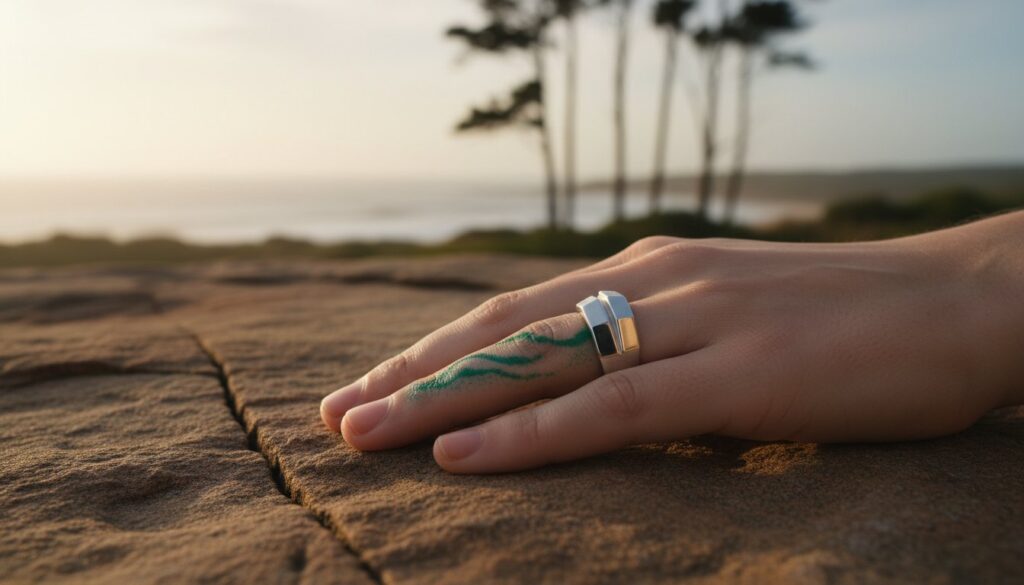
The jade-colored mark on your skin is often mistaken for a sign of poor quality, yet it is a fundamental chemical dialogue between your body and your gear. Unlike a true metal allergy, which manifests as itchy redness or swelling, this green tint is merely a surface-level deposit of copper salts. It is a reaction, not a rejection. This distinction is vital for the explorer who values technical precision, as it separates a simple cleaning task from a genuine health concern.
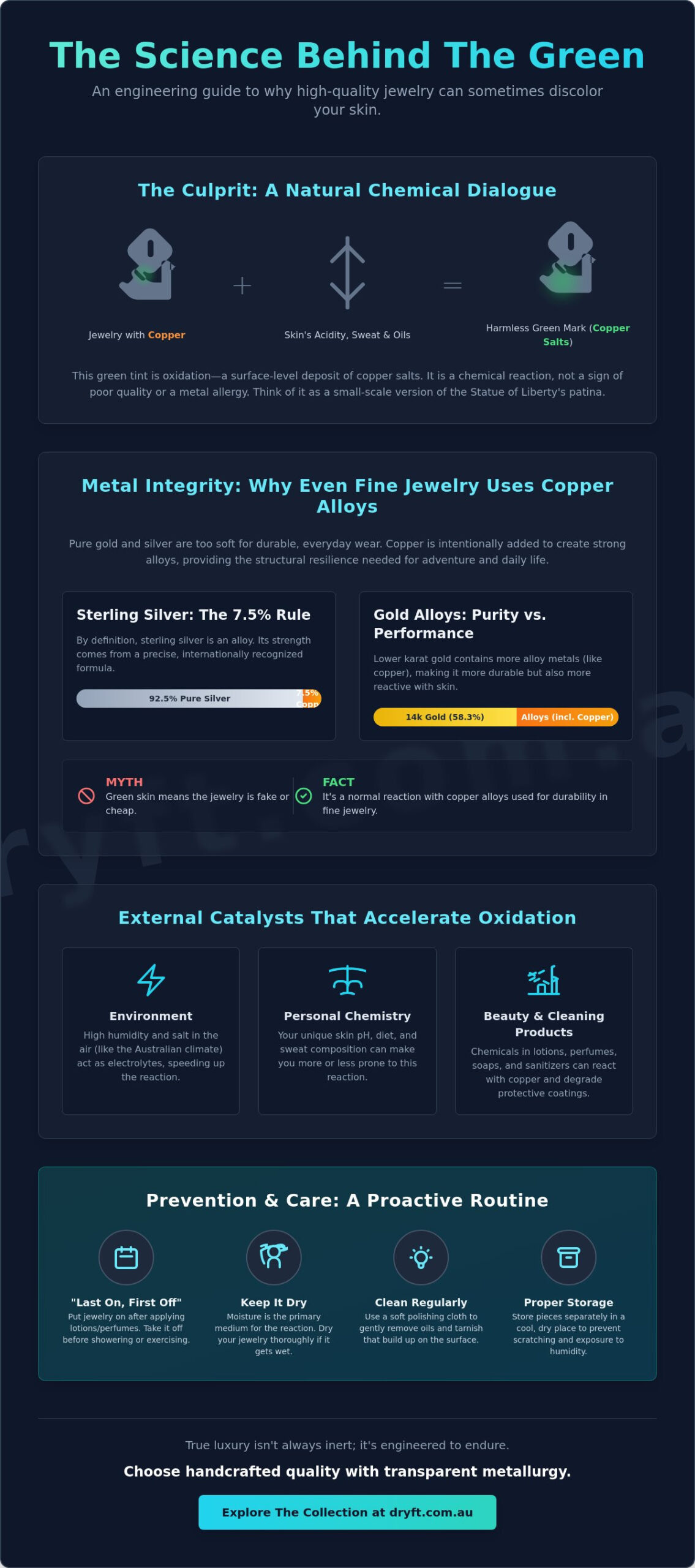
The primary catalyst in this transition is copper. When your skin’s natural acids and moisture meet the copper found in many high-end gold alloys in jewelry, oxidation occurs. This process creates copper chlorides or carbonates, leaving behind that signature mark on the skin’s surface. For the modern adventurer, understanding why is my jewelry turning my skin green starts with accepting that even the most refined metals have a reactive side. It’s the same chemical narrative that gives the Statue of Liberty its iconic patina, though on a much more intimate scale.
The Copper Culprit: Why Metal Reacts
Pure gold and silver are remarkably soft. In their unalloyed state, they lack the structural integrity to survive the rigors of an off-road journey or the friction of daily activity. Copper is the essential reinforcement that provides the necessary hardness for lasting craftsmanship. As you move through humid environments, your sweat acts as an electrolyte. This moisture breaks down the metal’s surface at a molecular level, releasing ions into the environment of your skin. Chelation is the specific process where your skin’s natural oils and sweat bond with these migrating metal ions to create the visible green residue.
Myth-Busting: Does Green Mean ‘Fake’?
A common misconception is that quality is measured by a lack of reaction. This is a narrow view of engineering excellence. Even elite boutiques utilize copper to ensure their pieces don’t warp or scratch under pressure. The question of why is my jewelry turning my skin green often comes down to the specific metal ratio rather than a lack of authenticity. Solid gold pieces with lower karat counts contain a higher percentage of copper, making them naturally more reactive than 18k or 22k versions. The intensity of the reaction often reveals the piece’s construction. Gold-filled items have a thick layer of gold that resists oxidation for years, while gold-plated pieces may react quickly once the thin surface layer is compromised. True luxury isn’t always inert; it’s engineered to endure, and sometimes that endurance involves a visible chemical compromise.
Metal Integrity: Why Even Fine Jewelry Uses Copper Alloys
High-end engineering often requires a calculated sacrifice of purity for the sake of performance. While 24-karat gold represents the peak of chemical inertness, its structural fragility makes it unsuitable for the rigors of an off-road journey. It warps. It scratches against the grit of the trail. To ensure your treasures survive these demands, master craftsmen introduce copper alloys to provide essential structural resilience. This intentional blending is exactly why is my jewelry turning my skin green even when the piece is hallmarked as fine gold. The presence of copper creates a stronger molecular lattice, but it also introduces the potential for the chemical reaction of copper with your skin’s unique pH levels. It’s a necessary balance of glamour and grit.
Durability demands these alloys. Without them, your signature style wouldn’t survive a single season of exploration. Unlike mass-produced mystery metals that hide high-nickel fillers, handcrafted luxury relies on transparent composition. Understanding the specific metallurgy of your collection allows you to maintain your gear with the same precision you’d apply to a premium vehicle. It transforms a moment of confusion into a validation of your piece’s structural integrity.
Sterling Silver and the 7.5% Rule
Sterling silver is the quintessential living metal. By definition, it contains 92.5% pure silver and 7.5% copper. This specific ratio gives the metal its strength, yet it’s also the source of its reactive nature. When you’re out in the elements, the copper within the silver responds to sulfur and moisture, creating a patina that can transfer to your skin. This isn’t a defect; it’s a characteristic of the material’s evolution. Maintaining these pieces requires a proactive approach, which is why we recommend reviewing the ultimate jewelry care guide to preserve your handcrafted luxury against the elements.
Gold Alloys: 14k vs. 18k Reactivity
The karat system serves as a blueprint for durability. 14k gold consists of approximately 58.3% pure gold, with the remainder often composed of copper and silver. This higher copper content makes the piece incredibly tough, but it also increases the likelihood of skin discoloration. In contrast, 18k gold contains 75% pure gold. It offers a more refined sanctuary for sensitive skin while still maintaining enough alloyed strength for daily wear. Choosing between them is a matter of prioritizing either maximum purity or maximum structural resilience. This choice often dictates why is my jewelry turning my skin green in specific environments, as the lower gold content in 14k pieces provides more opportunities for oxidation.
For those who seek the perfect intersection of performance and elegance, choosing transparently sourced materials is vital. Knowing the exact composition of your gear is the first step toward a lifetime of confident wear. If you’re looking for a piece that embodies this philosophy, consider exploring our curated collection of durable treasures designed for the modern trailblazer who refuses to compromise on quality.
The External Catalysts: Skin pH and the Australian Environment
The trail doesn’t just test your endurance; it tests the chemical stability of everything you carry. While we’ve established that copper is a necessary component for durable engineering, the speed at which it reacts is dictated by your surroundings. Understanding why is my jewelry turning my skin green requires looking beyond the metal and into the mirror. Your body’s unique chemistry acts as the primary governor of this process, turning a stable alloy into a reactive patina in a matter of hours.
In the high-performance world of the modern adventurer, the science of skin discoloration proves that the environment is a powerful catalyst. Whether you are navigating the humid corridors of the Daintree or the salt-heavy air of the Great Ocean Road, your jewelry is under constant bombardment. Moisture, heat, and luxury skincare products create a “perfect storm” that accelerates metal breakdown. It’s a reminder that even a well-crafted sanctuary of style must eventually contend with the raw forces of nature.
Biological Variables: It’s Not the Jewelry, It’s You
Your skin is a living, breathing ecosystem with a naturally acidic pH, typically ranging from 4.7 to 5.7. However, this acidity isn’t static. Diet, hydration levels, and even certain medications can temporarily shift your skin’s chemistry toward a more corrosive state. This explains why a ring might leave a green mark one week but remain perfectly inert the next. High-protein diets or intense physical exertion can increase the ammonia and acidity in your sweat, turning your skin into a high-speed laboratory for oxidation. For those with “acid skin,” handcrafted metals will always show their reactive nature more quickly than on others.
Environmental Stressors from Coast to Outback
The Australian landscape presents unique challenges for precious metals. Along the coast, the air is saturated with sodium chloride. This salt spray is incredibly corrosive, stripping away protective oils and inviting oxidation to take hold. If you move from the beach to a chlorinated pool, the stakes rise; chlorine can cause “stress corrosion,” making even the toughest alloys brittle over time. The intersection of sweat and salt air creates a powerful electrolyte for oxidation. When you combine this with the heavy sunscreens and perfumes essential for a day in the sun, you are essentially coating your jewelry in a reactive film. Protection requires more than just high-quality materials; it requires an awareness of the terrain you are traversing.
How to Prevent Skin Discoloration and Restore Your Pieces
Ownership of high-end jewelry is a commitment to maintenance. Just as you would service a premium off-road vehicle after a grueling expedition, your handcrafted pieces require intentional care to perform at their peak. Preventing that emerald shadow starts with a simple, non-negotiable commandment: the “last on, first off” rule. Your jewelry should be the final element added to your ensemble, placed on the skin only after perfumes, sunscreens, and luxury lotions have fully absorbed. By creating this chemical buffer, you minimize the immediate triggers that answer the question of why is my jewelry turning my skin green during a day of wear.
If you discover a mark at the end of the day, do not panic. The residue is easily managed. A gentle wash with mild soap and warm water usually does the trick. For more stubborn marks, a soft cloth dipped in a mixture of lemon juice and water can neutralize the copper salts without irritating your skin. Once the skin is clear and dry, you can focus on restoring the integrity of the jewelry itself.
The Daily Maintenance Routine
Consistency is the foundation of reliability. After every wear, take thirty seconds to wipe down your pieces with a clean, lint-free cloth. This removes the invisible layer of skin oils and environmental salts accumulated on the trail. Never shower or swim with your handcrafted treasures; the chlorine in pools and the minerals in tap water act as aggressive oxidizers. When your gear isn’t in use, store it in airtight sanctuaries. Use small zip-lock bags or lined jewelry boxes to limit atmospheric exposure, effectively pausing the oxidation clock until your next journey.
Barrier Methods and Professional Solutions
For those with particularly reactive skin chemistry, a specialized jewelry sealant can provide a transparent shield between the alloy and your skin. While some suggest clear nail polish, this is a temporary fix that can flake and trap moisture. Professional re-plating is a far superior investment for rings and bracelets that see heavy use. Over time, the protective layer on even the finest pieces can wear thin, exposing the copper-rich core to the elements.
When home remedies aren’t enough to restore that original luster, it is time to consult the experts. You can explore our comprehensive jewelry care and repair services to learn more about deep-cleaning techniques and professional restoration. Maintaining your collection shouldn’t be a chore; it is an act of preserving the tools of your personal expression. To ensure your next acquisition is built for the long haul, browse our collection of adventure-ready jewelry designed to withstand the grit of the wild while maintaining a refined aesthetic.
Beyond the Surface: Choosing Handcrafted Quality Over Mass-Market Alternatives
Selecting the right gear is about more than aesthetics; it is about the integrity of the materials against your skin. While we have explored the science of oxidation, the severity of the reaction often stems from what is hidden beneath the surface. Mass-produced costume jewelry frequently relies on high-copper brass or nickel fillers to drive down costs. These “mystery metals” are the primary reason for persistent questions about why is my jewelry turning my skin green, as they lack the refined balance found in premium alloys. When you choose a piece of lower quality, you are often inviting a more aggressive chemical reaction that no amount of cleaning can fully resolve.
True luxury is found in transparency and the rejection of compromise. Investing in handcrafted pieces means moving away from disposable fashion and toward an uncompromising partner in adventure. It is about choosing materials that can handle the transition from rugged trails to refined evenings without leaving a mark of poor craftsmanship behind. High-end engineering ensures that your jewelry performs as flawlessly as the rest of your kit, providing a well-crafted sanctuary for your personal style.
The Ethical Advantage
Transparency is the hallmark of a seasoned explorer. When you invest in handcrafted pieces, you aren’t just buying an accessory; you are securing a documented material history. Following the ethical jewelry in Australia standards ensures that your pieces meet rigorous safety benchmarks. For instance, the EU REACH regulation limits nickel release to 0.5 micrograms per square centimeter per week, a standard that protects you from the toxic fillers often found in mass-market alternatives. This level of technical precision ensures that your commitment to conscious luxury is also a commitment to your skin’s health.
Pearls and Diamonds: The Ultimate Low-Reaction Choice
For those seeking the ultimate low-reaction choice, organic materials offer a sophisticated solution. Handcrafted pearl jewelry, such as the Baroque Pearl Drop Earrings, provides a naturally inert surface that respects your body’s chemistry. Unlike base metal chains that are prone to heavy oxidation, pearls and high-karat gold offer a quiet confidence that remains untarnished by sweat or salt air. These are the “forever” pieces designed for the modern trailblazer.
Understanding why is my jewelry turning my skin green empowers you to choose quality over convenience. Whether you are wearing the Pearl String Bracelet or a custom gold alloy, your jewelry should reflect a passion for craftsmanship and a deep respect for the wild. We invite you to explore a collection where grit meets glamour, ensuring your next journey is marked by elegance rather than oxidation.
Mastering the Elements of Your Signature Style
The green mark on your skin is a testament to the living nature of fine alloys. It’s no longer a mystery or a source of embarrassment, but a clear indicator of how your body chemistry interacts with the copper required for durable engineering. By mastering a “last on, first off” routine and choosing materials that respect your biological pH, you reclaim control over your aesthetic. You now understand exactly why is my jewelry turning my skin green and, more importantly, how to prevent it without sacrificing the grit your lifestyle demands.
Reliability in the wild requires gear that is tested, transparent, and built to last. Our commitment to excellence ensures that every piece is a sanctuary of craftsmanship, utilizing ethically sourced materials and expert local design to survive the most demanding environments. Whether you’re navigating a remote trail or a refined evening event, your jewelry should be an uncompromising partner. We provide the technical assurance you need so you can focus on the journey ahead.
Explore our collection of handcrafted, low-reaction luxury jewelry and experience the intersection of rugged durability and refined elegance. With our expert jewelry care and repair support, your collection will remain as resilient as your spirit of discovery. Venture forth with confidence.
Frequently Asked Questions
Is the green mark on my skin dangerous or toxic?
No, the green mark is not dangerous or toxic. It is a harmless chemical reaction between the copper in your jewelry and the natural acids on your skin, resulting in a surface-level deposit of copper salts. While the color might be startling, it does not indicate metal poisoning or a medical emergency. You can easily remove the residue with standard soap and water without any lasting impact on your health.
Does expensive 14k or 18k gold ever turn skin green?
Yes, even premium gold alloys can cause discoloration because they contain copper to provide structural integrity. While 24k gold is chemically inert, it is too soft for the rigors of an active lifestyle. Most high-end 14k and 18k pieces are alloyed with copper to ensure they don’t warp or scratch. If your skin pH is particularly acidic, this copper can react, which is why is my jewelry turning my skin green despite the quality of the piece.
How do I get the green stain off my finger quickly?
You can remove the green stain quickly by washing the area with warm, soapy water and a soft cloth. If the mark is stubborn, apply a small amount of lemon juice or white vinegar to a cotton pad and gently wipe the skin. The mild acidity in these liquids breaks down the copper salts almost instantly. Always rinse the area with fresh water afterward to ensure no acidic residue remains on your skin.
Why does my silver ring turn my finger green but my necklace doesn’t?
Friction and the entrapment of moisture make rings more likely to cause discoloration than necklaces. A ring sits tight against the skin, creating a warm environment where sweat and oils are trapped against the metal’s surface. This accelerates the oxidation of the 7.5% copper found in sterling silver. Necklaces generally hang more loosely, allowing for airflow and reducing the concentrated contact time between the alloy and your skin’s natural acids.
Can sweat and perfume make my jewelry react faster?
Sweat and perfume are aggressive catalysts that significantly speed up the metal oxidation process. Sweat contains electrolytes like sodium and chloride that facilitate the chemical breakdown of copper alloys. Meanwhile, the complex chemicals in luxury perfumes and sunscreens can strip away protective oils from the metal. Adhering to a strict “last on, first off” routine helps shield your handcrafted treasures from these common environmental triggers.
Will clear nail polish ruin my high-quality jewelry?
Clear nail polish won’t permanently destroy the metal, but it is an unrefined solution that can compromise the aesthetic of fine jewelry. As the polish inevitably flakes and peels, it can trap moisture and dirt against the alloy, potentially leading to uneven tarnishing. For premium pieces like the Baroque Pearl Drop Earrings, seeking professional re-plating or using specialized jewelry sealants is a more reliable way to maintain technical excellence.
Is green skin the same as a nickel allergy?
No, green skin is a harmless chemical reaction, whereas a nickel allergy is an immune response. An allergy typically presents as redness, itching, or blistering. The green tint is simply a deposit of copper salts on the skin’s surface. While modern standards like the EU REACH regulation strictly limit nickel content to 0.5 micrograms per square centimeter, copper remains a safe and essential component for the durability of high-end jewelry alloys.
How often should I clean my jewelry to prevent discoloration?
You should wipe your jewelry with a soft, lint-free cloth after every wear to remove accumulated skin oils and salts. For pieces that accompany you on rugged adventures, a deeper cleaning every two to four weeks is recommended to prevent the buildup of reactive films. Consistent maintenance is the foundation of reliability. It ensures your collection retains its refined luster and structural integrity regardless of the terrain you traverse.